Get Full Government Meeting Transcripts, Videos, & Alerts Forever!
Get email alerts on the Oversight And Transparency topic
No spam. Unsubscribe anytime.
Interim fire chief says agenda wording stirred unrest; committee promises clearer coordination and more financial transparency
Summary
Interim Chief Ryan Foley told the Dalton credential committee that a recently published agenda included operational items without consultation, causing confusion and low morale; the committee apologized for wording and agreed to pursue clearer agendas and to produce separate EMS and fire cost reporting on request.
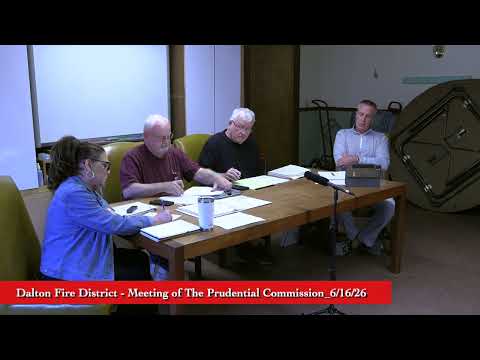
Interim Chief Ryan Foley opened a section of the meeting by telling the credential committee that a recently posted agenda contained several operational items about the fire district presented without prior discussion or context. He said the publication generated "unnecessary concern, speculation and unrest" among department personnel and called for future matters affecting department operations to be discussed with district leadership before public posting.
"The agenda was published without any prior discussion with fire district leadership ... This does not produce productive dialogue or effective governance; instead it risks damaging morale," Foley said.
Committee members asked Foley to identify specific agenda items; he listed financial policies, reporting, EMS‑fire reporting separation, youth projects, capital planning and mutual aid agreements as examples that should have accompanying context. In response, the chair said he had drafted the agenda and acknowledged the need for clearer wording. "That was an error on my point," the chair said later when the public raised concerns; he emphasized the committee’s intent is collaboration, not criticism of department competence.
Separately, several members asked staff to produce monthly breakdowns separating EMS costs and fire costs so the committee can track time allocation and spending. Staff said they can run time‑breakdown reports and invited committee members to sit with them to refine the requested reporting. One committee member suggested using a simple 50/50 split for shared time as a starting point while the district develops better accounting.
Why it matters: The chief’s remarks point to a communications gap between elected oversight bodies and department leadership. The committee agreed to improve agenda language and to work directly with department staff to get clearer financial reporting rather than publicly airing operational critiques without context. The transcript records the chief’s concerns, the chair’s acknowledgment and a commitment to address wording and transparency going forward.
What happens next: Staff will provide existing financial policies and run requested EMS/fire time allocation reports; the committee offered to meet with staff to design the reports and promised clearer agenda descriptions in future postings.