Get Full Government Meeting Transcripts, Videos, & Alerts Forever!
Get email alerts on the Eifd Budget topic
No spam. Unsubscribe anytime.
West Sacramento authority adopts EIFD budgets, approves short-term transfer to cover September debt payment
Summary
The City of West Sacramento Public Financing Authority approved Resolution 26-1 adopting EIFD budgets for FY 2025–26 and FY 2026–27; staff said the district issued roughly $57.2 million in bonds and recommended a near-term $1.4 million transfer to ensure cash for a September debt service payment.
The City of West Sacramento Public Financing Authority approved Resolution 26-1, adopting budgets for the Enhanced Infrastructure Financing District (EIFD) for fiscal years 2025–26 and 2026–27 and authorizing short-term funding to meet an upcoming debt service obligation.
Roberta Raper, the city’s finance director and treasurer for the EIFD, told the authority that the EIFD issued approximately $57.2 million in bonds in July 2025 to finance infrastructure projects identified in the district’s infrastructure financing plan. She said the proposed budgets cover legally required debt service payments, trustee fees, continuing disclosure costs, fiscal consultant and legal services, and administrative allocations required to operate the district and remain in compliance with bond covenants.
Raper said the district relies on tax‑increment revenues generated inside the EIFD boundaries and transfers from the city’s Measure G fund in line with the bond documents and the EIFD budget policy. For the current fiscal year 2025–26, she said staff recommends a net transfer of about $1.4 million to ensure cash is on hand for a September debt service payment because the first tax‑increment receipts for the fiscal year are not scheduled until January.
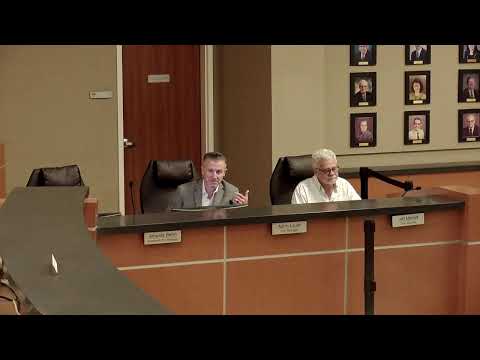
A member asked whether a formal budget‑to‑actual report for 2025–26 would be available; Raper said an annual report with audited numbers will be provided several months after the fiscal year end under a recent change in law and that the authority’s meeting schedule will shift to about six months after the fiscal year close to present those figures.
A motion to adopt Resolution 26-1 was moved, seconded and approved by the authority. Several members registered “aye” during roll call and the chair declared the motion carried.
What happens next: staff will provide the annual budget‑to‑actual report when available and will incorporate those audited results into the authority’s regular review cycle.