Get Full Government Meeting Transcripts, Videos, & Alerts Forever!
Get email alerts on the Animal Control Ordinance topic
No spam. Unsubscribe anytime.
Board debate leaves controversial animal-control amendment on 30‑day review
Summary
After heated debate over a proposed animal-control amendment to McHenry County’s public health ordinance, motions to suspend the rules and to send the measure back to committee failed; the ordinance (articles 1–7) remains on a 30‑day review with committees expected to consider language changes.
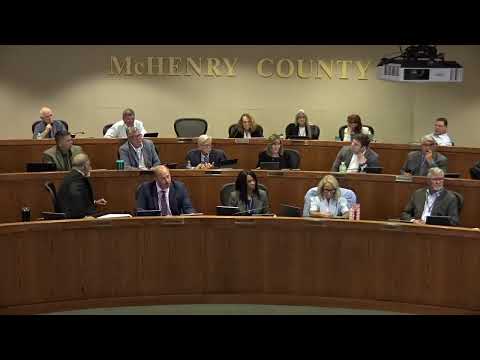
The McHenry County Board spent much of its June 16 meeting reviewing proposed public health ordinances (articles one through seven) and a contested animal-control amendment addressing rodeos and animal-welfare concerns. Board members, advocates and farmers debated exemptions for sanctioned rodeos and agricultural operations, enforcement mechanisms and unintended consequences.
Board member Jim Karns moved to send the ordinance back to committee to settle confusing or conflicting language; Dr. Sager, who spoke at length, said he supports banning certain abusive practices but urged exemptions for established agricultural operations and sanctioned rodeos that operate under state and federal guidance. "We need to protect all animals in this format, but exempt animal husbandry and county/state-sanctioned fairs and rodeos," he said.
Several members argued procedural options: one motion to suspend board rules (to allow the board to split the ordinance and remove the animal-control amendment immediately) went to a recorded electronic vote and failed. A later motion to send the entire ordinance back to committee also failed in a vote, leaving the ordinance in its 30‑day review status. Board leadership instructed committees to take up the language during the review period.
Speakers emphasized consistent drafting, enforceability and appropriate penalties, and several members urged staff to coordinate with the state Department of Agriculture where statutes and fair procedures already apply. Members seeking clearer language stressed that any new ordinance should not unintentionally penalize standard animal‑husbandry practices.
No ordinances were adopted at the June 16 meeting; the full ordinance package remains on its 30‑day review schedule and committees are expected to vet specific animal-control language in the coming weeks.