Get Full Government Meeting Transcripts, Videos, & Alerts Forever!
Get email alerts on the Community Affairs topic
No spam. Unsubscribe anytime.
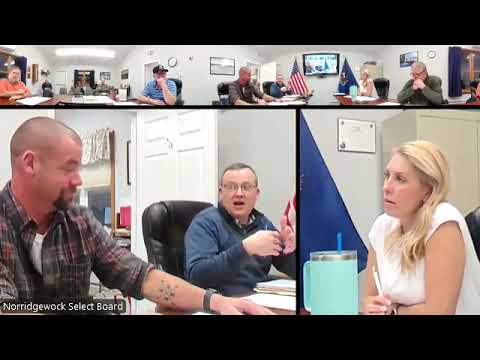
Board debates voter communication after confusing subdivision ballot, discusses paving timeline and downtown panhandling
Summary
Members discussed confusion over a recent subdivision amendment ballot and options for a neutral local voter guide, reviewed timing for Bigalow Hill paving bids, and asked staff to research legal options to address panhandling at the downtown monument.
Select Board members raised concerns that wording on a recent subdivision amendment confused voters and discussed producing neutral, concise voter information ahead of future ballots.
Board members said they had already produced newsletters, social posts, and held multiple public hearings but that ballot language and limited space on ballots can leave voters unclear. One member suggested a short "crib note" or neutral voter guide distributed with ballots or in the newsletter explaining "what a 'yes' means" and "what a 'no' means," while staff cautioned state law limits what can be displayed inside polling places and that materials must be neutral.
The board also received an update on the Bigalow Hill paving and drainage project: a mandatory pre-bid meeting is scheduled next Monday with bids due later that week and a plan to review bids at an April meeting; preliminary project cost was discussed around $1 million and described as congressional direct-spending funds.
Finally, several board members reported constituent complaints about panhandling at a busy downtown intersection and the monument area. Staff noted that ordinances that broadly ban signage or panhandling have been challenged on First Amendment grounds in other cities; "You have the right to free speech," staff said while describing how some municipalities regulate signage and the location of solicitors. The board asked staff to research options, consult with the sheriff’s office, and propose ordinance language or alternatives for a future agenda.
Next steps: staff will investigate legal options and enforcement approaches for downtown panhandling, evaluate voter-guide logistics that comply with election law, and return to the board with options on each topic.