Get Full Government Meeting Transcripts, Videos, & Alerts Forever!
Get email alerts on the Data Centers topic
No spam. Unsubscribe anytime.
Residents urge county pause on data-center approvals as board plans 12-month moratorium
Summary
Public commenters told the Winnebago County Board they oppose building hyperscale data centers in or near rural towns, citing water, noise and environmental concerns. County Executive Hints said the county will pursue a Chapter 66 moratorium (12 months) in areas where the county holds zoning authority to study impacts and write regulations.
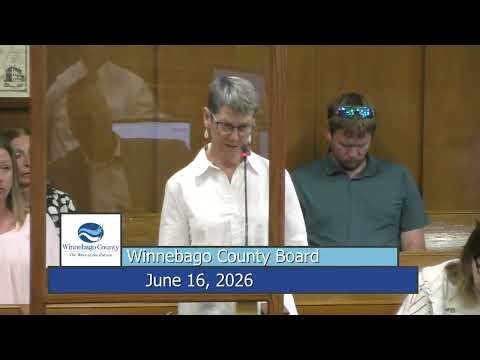
Several residents told the Winnebago County Board on June 10 they oppose large data centers near their towns, pressing officials to act before companies seek permits.
"We're opposed to data centers completely being built near us," said Cameron Chapen, who said he speaks for eight adults in Amro. Chapen said data centers require "millions of gallons of water to cool them down," produce 24/7 noise and vibration that can harm sleep and local quality of life, and sometimes rely on fossil-fuel backup power that could harm air quality. He described a Beaver Dam resident he said has experienced property damage and stream contamination since a local data center was built.
County Executive Hints acknowledged the public concern and outlined the county's approach: under Chapter 66 of the Wisconsin statutes the county can adopt a temporary pause on accepting or approving new development applications where it has zoning authority. "These pauses are not permanent bans," Hints said, "they give officials time to research impacts and write rules, especially in places where zoning codes currently lack definitions or safeguards for modern hyperscale or AI-driven data centers." He said the county plans a 12-month moratorium, to be brought to the planning-and-zoning committee and then to the full board for approval.
Supervisors asked technical and jurisdictional questions during a follow-up Q&A. Several members clarified that the county moratorium would be narrow in scope — it would apply only in the four towns where the county holds general zoning (Aloma, Omro, Nenina and Nikimai, as the executive noted) — and urged broad public engagement, including town halls and surveys, as staff and consultants study potential rules.
Public commenters repeated concerns about water use, land loss, noise, heat-island effects and local employment benefits. "They require a huge draw on our water sources," said Caleb Bladey of Omro. Ally Hagermanerman urged attention to other large-scale energy projects on the county agenda, saying residents also worry about the impact of large solar farms on birds and wildlife.
Hints said the county aims to coordinate with municipalities that control their own zoning (for example the city of Oshkosh and Menasha) so that policies across jurisdictions are as consistent as possible, and that departments already have begun investigating issues such as energy and water demand, infrastructure strain and noise. He said the county will use surveys, focus groups and a July 15 board session to gather input and expects to have draft policy language prepared during the moratorium window.
The board did not adopt the moratorium at the meeting; Hints said it will come to planning and zoning for an initial policy discussion in July, and then to the full board for any required approval. The administration emphasized the moratorium is intended as a planning tool, not a prohibition on future development.
Next steps: the planning-and-zoning committee will consider the proposed moratorium and draft regulatory work in July; the full board will need to vote to put a moratorium into effect.