Get Full Government Meeting Transcripts, Videos, & Alerts Forever!
Get email alerts on the Career Technical Education topic
No spam. Unsubscribe anytime.
Capital Area Technical Center budget: advisory panel approves $21,000 cost-sharing as instructor pay outpaces state formula
Summary
The Capital Area Technical Center told the RSU 11 board that instructor salaries, moved to a 1:1 experience credit, have outpaced the state funding parameter and the center’s advisory committee approved a modest $21,000 cost-sharing ask to avoid depleting fund balance.
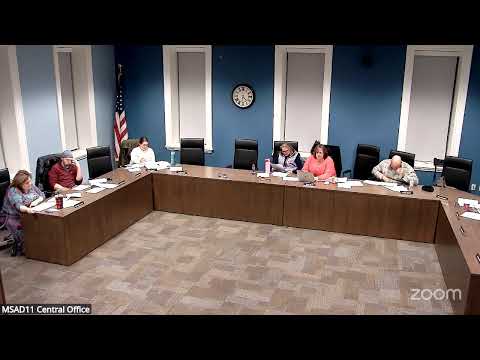
The Capital Area Technical Center (CATC) presented its FY27 budget needs to the RSU 11 board on June 18, urging a modest local contribution to avoid drawing down its reserves.
Nick Kennedy, the CATC guest presenter, said the center shifted its instructor salary scale so industry hires receive credit for full prior work experience (a 1:1 scale) rather than the previous 2:1 arrangement. "We were asking people to come out of industry and take a 50% pay cut," he said, describing why the scale change was necessary. Kennedy said many recent hires are now at the top of the pay scale and some are earning more than $80,000 while the salary parameter in the state funding formula is roughly $58,000.
Why it matters: CATC officials said higher-than-formula salaries are keeping programs viable but are unsustainable if the center exhausts its fund balance. To avoid that outcome, the CATC advisory committee voted to include $21,000 in cost sharing from sending districts when it approved its budget recommendation.
Board members asked for clarity about how the cost-sharing figure was calculated and how much the district would have to contribute. One board member noted a small prior contribution figure of $3,539.65 and cited earlier fund-balance references of about $91,000 that were later updated to about $132,000 after ED279 adjustments. Kennedy said the center could cover the shortfall for another year from reserves but that relying on fund balance is poor long-term practice.
Program enrollment and staffing: Kennedy outlined program-by-program enrollment and staffing challenges. Firefighting (a half‑time program) had five students this year; EMT enrollments were stronger. Machine tool programs had fallen in recent years, in part after the previous instructor died in March; CATC hired a new instructor from KBEC Technologies (Cody Row) and the advisory committee opted to continue the program. The business academy recently resumed after a one-year gap and currently has about eight or nine students.
Recruitment and outreach: The center uses student shadow days, visits to sending schools beginning in January and short informational interviews to recruit and place students. Kennedy credited student-to-student word-of-mouth and noted that Stephanie Turjan, the student services coordinator, produces recruitment videos and coordinates visits.
Recognition and student visibility: Board members discussed ways to better recognize CATC completers at high‑school graduations (stoles/cords or program notations) and to increase visibility via open houses and skills demonstrations. Kennedy said CATC has about 35 students in its graduating cohort (juniors and seniors combined) and suggested stronger cross-promotion with sending schools.
Next steps: The advisory committee has recommended the $21,000 cost-sharing contribution; the recommendation will inform sending-district budget deliberations. Kennedy remained to hear the district’s ED279 presentation.