Get Full Government Meeting Transcripts, Videos, & Alerts Forever!
Get email alerts on the Rent Stabilization topic
No spam. Unsubscribe anytime.
Springfield council backs resolution urging state to allow local rent stabilization
Summary
After more than an hour of public testimony and floor debate, the Springfield City Council on June 15 voted to support state bills H2328 and S1447 that would give municipalities a local option to adopt rent stabilization measures, urging the legislature and governor to act.
The Springfield City Council on June 15 voted to approve a non-binding resolution urging the Massachusetts Legislature to repeal the statewide ban on municipal rent stabilization and to allow cities and towns to adopt local rent-stabilization measures.
The action followed a lengthy public comment period in which more than a dozen residents described sudden rent increases, displacement, and housing insecurity. Neighbor to Neighbor member Nvea Cruz told the council rent stabilization is a tool “to keep housing affordable, stable and people centered,” saying the group had collected more than 125,000 signatures statewide calling for action. Nicole Kley described an increase in her rent from $950 to $2,200 and urged the council to “stand with renters, stand with working families.” Several homeowners, including Wolfford Champ Godbbo, framed the debate as a defense of long-term residents against corporate buying and gentrification.
Senator Adam Gomez, who addressed the chamber after the public speakers, framed the proposal as a local-option bill—rather than a statewide mandate—designed to let communities tailor protections. Gomez said the legislation is linked to public health, public safety and educational stability, and reiterated that his bill would allow municipalities to adopt targeted measures rather than a one-size-fits-all approach.
Council debate emphasized local impacts and timing. Councelor Hurst, a sponsor, noted the subcommittee had voted unanimously to advance the resolution. Some members asked whether state timing could allow a ballot or legislative fix before voters consider a statewide referendum in the fall; Gomez and several councilors indicated the local-option bill is intended to create a pathway for municipalities while broader debate continues at the state level.
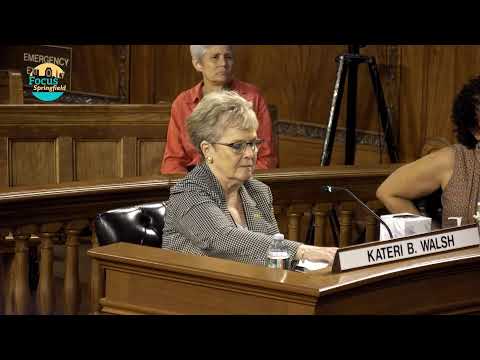
The council’s roll-call vote was recorded by the clerk. The resolution passed with the following recorded outcome: Yes — Santanelo, Martin, Govan, Walsh, Hurst, Davila, Fenton, Click Bruce, Edwards, Delgado (10); No — none; Absent — Perez, Brown, Whitfield (3). The approved resolution asks the city clerk to transmit copies to the attorney general, the Springfield legislative delegation, the mayor, and the governor.
The resolution itself does not change local law; it is a formal expression of the council’s support for the state bills that would enable local rent stabilization. Council members and residents repeatedly urged follow-up steps including hearings, data collection, and coordination with state legislators to define local exemptions and implementation details.
The council moved on to the rest of its agenda after the vote.