Get Full Government Meeting Transcripts, Videos, & Alerts Forever!
Get email alerts on the Term Limits topic
No spam. Unsubscribe anytime.
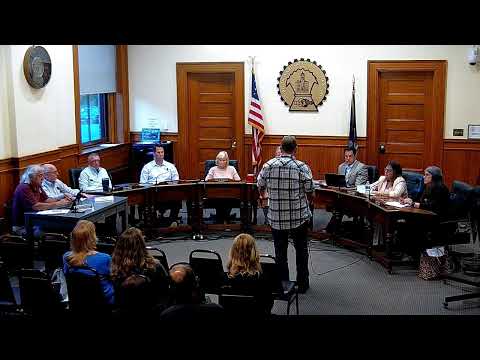
Lancaster residents split as board hears public testimony on proposed term limits
Summary
At a June 15 public hearing, dozens of Lancaster residents and town board members debated a proposed referendum to limit supervisors and council members to two consecutive four‑year terms; supporters said limits encourage fresh leadership, critics warned about losing institutional knowledge and urged more public education before a vote.
A packed public hearing on June 15 drew vigorous debate over a proposal to place term limits for elected town officials on a future referendum.
Council Member Melissa Studley, who introduced the proposal, told the board she sought to “expand participation in the electoral process and bring new ideas to governance.” Studley proposed limiting the town supervisor and council members to two consecutive four‑year terms while exempting town justices, the town clerk and the highway superintendent from the limits.
Supporters at the hearing said term limits would keep power from becoming concentrated and create opportunities for new leaders. “No supervisor or council member should remain in their positions permanently,” said Greg SOA of Spruce Terrace, who urged putting the decision to voters. “Term limits help keep the system open,” he said.
Opponents and some board members said the public needs more time and information before any referendum. Longtime resident Robert Th. — who described 36 years as an elected town clerk and 15 years on the zoning board — opposed limits for administrative offices such as town clerk and highway superintendent, saying those offices provide continuity and institutional knowledge. “They are the hinge pins for the continuity of government,” he said.
Supervisor Larry and other board members negotiated competing procedural views during the meeting: some urged sending the matter to a study committee to produce outreach and education, while Studley argued the town board is the public body elected to introduce legislation and that subsequent public hearings and a referendum give residents the final say. “The voters will have that final say,” Studley said.
Board members clarified timing and mechanics: because the state has realigned election cycles, some current terms will be three years to move elections to even‑year cycles; any local law would undergo board debate, a formal vote and eventually, if approved by the board, a referendum where Lancaster voters decide.
The board closed the hearing after receiving public comment. No final vote on a local law was taken; the board must decide whether to draft local‑law language, hold additional outreach, or send the matter to a committee. If advanced, the measure would still need to pass through required procedures before appearing on a ballot.