Get Full Government Meeting Transcripts, Videos, & Alerts Forever!
Get email alerts on the Housing topic
No spam. Unsubscribe anytime.
Commission recommends 5‑year abatement for Cherry Red Investments housing project on 39th Street
Summary
The commission recommended a 5‑year residential tax abatement for Cherry Red Investments to build 44 single‑bedroom townhouses on 39th Street; construction is expected to start in 2026 and finish by end of 2027, with permanent employment estimated at about 10 positions and private maintenance of internal roads.
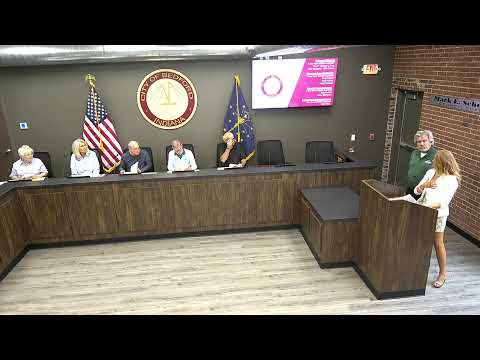
The Bedford Redevelopment Commission voted to recommend a 5‑year residential tax abatement for Cherry Red Investments’ proposed 44 single‑bedroom townhouses on 39th Street, forwarding the recommendation to the Common Council for final approval.
Greg explained that the commission’s average score for the residential abatement was 96.6, which translated to the maximum five-year period permitted for residential projects. “Based on your score you’re recommending a 5-year abatement,” a commissioner summarized after Greg presented the scoring.
Representatives—identified as Brian and J.J. Morris—said the project is in one of the city’s three Economic Recovery Zones. They told commissioners construction would begin in 2026 with completion hoped for by the end of 2027, and that Cherry Red Investments will maintain all internal roads so the city won’t assume maintenance responsibility. “This project would help accommodate some of those residents in need of good, clean, affordable housing,” a presenter said.
Commissioners and staff sought clarification about employment numbers. The owners and staff agreed that construction-phase labor (an estimated 75 workers during construction) is distinct from permanent employment; the parties clarified that the expected permanent workforce for the development will be about 10 employees and that construction labor typically is not counted as retained permanent jobs for SB1 reporting. The commission then moved, seconded and approved a recommendation to send the 5‑year abatement to the Common Council.
The action was a recommendation; the Common Council will consider whether to grant the abatement and will set any financial distribution or percentage if it approves.