Get Full Government Meeting Transcripts, Videos, & Alerts Forever!
Get email alerts on the Master Plan Update topic
No spam. Unsubscribe anytime.
County planners present master‑plan update and greenways options to council committee
Summary
Kyhoga County planners told the Brooklyn Committee of the Whole they updated the city’s 2020 master plan, summarized engagement with 397 community and 264 student survey responses, and recommended targeted actions and regional trail connections to close critical gaps between Big Creek and Brookside.
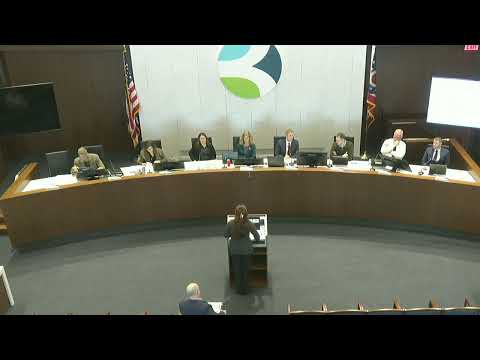
Laura Mendes Ortiz, a planner with the Kyhoga County Planning Commission, and colleagues presented a condensed update to Brooklyn’s 2020 master plan to the Committee of the Whole on March 9, outlining progress on prior recommendations and new, prioritized tasks for implementation.
Ortiz said the update relied on an implementation scorecard and community outreach that produced 397 community responses and 264 student survey responses. "The biggest one that we heard both from students and the community overall was the desire for an updated recreation center," Ortiz said, and she listed other frequent concerns including property maintenance, street cleanliness and pedestrian safety.
The presentation retained the plan’s five original goals—strengthen identity, enhance parks and recreation, promote a strong local economy, maintain exceptional services and facilities, and foster a livable community—but updated recommended actions and introduced new tasks such as prioritizing sidewalk upkeep and expanding tree canopy. Ortiz noted that parks and recreation had the highest satisfaction among respondents (about 72% satisfied or very satisfied), while local economic development showed lower satisfaction and will rely heavily on partnerships.
On site‑specific recommendations, planners proposed targeted interventions along established focus corridors (Ridge Road, Memphis Avenue and Brook Park Road) and new priority intersections including Brook Park & Tedman and Memphis & Tedman. Ridge Road was identified as a major pedestrian barrier, described in the presentation as having more than 16,000 average daily trips in 2025 and a 35 mph limit on a wide, four‑lane roadway. Ortiz recommended a tiered approach to pedestrian safety—from better high‑visibility crosswalks and signage to pedestrian refuge islands and, in some midblock locations, rectangular rapid flashing beacons.
The team also set out redevelopment scenarios for Bitoff Plaza, ranging from façade and public‑realm upgrades to mixed residential infill, and outlined options for a city‑owned 7‑acre property at Tedman and Memphis where community input was split between mixed‑use and single‑family outcomes. "Green space and tree canopy is something that is very much prioritized by the community," Ortiz said of that site.
Jim Sonhalter, the county planning manager, summarized the Kyhoga Greenways plan update and described Brooklyn’s role in closing a nearly four‑mile local ‘critical gap’ in the county trail network. "If we can connect Big Creek to Brookside, then you can get through the zoo and to the tow path," Sonhalter said, describing a mix of off‑road side paths and neighborhood greenways that would rely on partnerships with Metro Parks, the regional sewer district and utility owners.
During question-and-answer exchanges, committee members pressed on whether proposed routes would be on existing streets or off‑road. Sonhalter said planners identified six facility types and that design choices would depend on right‑of‑way constraints and safety goals; he described the aim as an "all ages and abilities" network that combines side paths, buffered lanes and neighborhood greenway treatments where possible.
Planners said the packet before council contains preliminary recommendations and that the next steps are to finalize prioritization, identify funding needs, clarify implementation responsibilities and prepare the draft for adoption. Ortiz said the team expects to move toward finalization in the coming weeks with an eye on an April finish for the update.
The presentation provided council with specific project ideas they can fold into budgeting and permitting conversations; planners emphasized that several of the greenways connections will require interagency partnerships rather than being city‑led projects.