Get Full Government Meeting Transcripts, Videos, & Alerts Forever!
Get email alerts on the Nonprofit Funding Requests topic
No spam. Unsubscribe anytime.
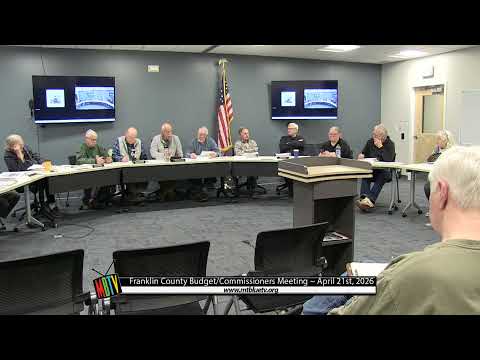
Local nonprofits press Franklin County budget committee for funding as needs climb
Summary
At an April 17 budget committee hearing, more than a dozen local nonprofits urged the county for operating support — requests ranged from $3,700 for the firefighters association to $74,000 for the Extension office — as presenters cited rising demand, shrinking grants and specific program impacts for households across Franklin County.
More than a dozen community organizations asked Franklin County’s budget committee on April 17 for continued or increased operating support, warning that rising costs and declining grant streams are squeezing local safety‑net services.
Joe Teranova, a volunteer board member at the Care and Share Food Closet, told the committee the pantry serves about 30 families per shift and roughly 750 families — about 2,100 people — per month. “The food we have to pay for costs us about $36,000 a year,” he said, adding that a typical 12‑jar case of peanut butter that once cost $7 now costs $21. Teranova said recent spikes included a Friday shift that served 57 families in two hours and offered to provide town‑level client origin data to the committee.
Rachel Mlullen, president of the Franklin County Extension Association, asked for approximately $74,000 to keep the local Extension office operating on Pleasant Street. Mlullen said the local office supports agricultural outreach and 4‑H programming; she said the university funds four professional field staff but does not cover local office operating expenses. County members pressed for detail on the request and asked for a clearer breakdown of university versus local funding.
Other requests included $36,000 for the Franklin County Soil & Water Conservation District to support an executive director and local programming; $15,000 for the Franklin County Children’s Task Force for home visiting, after‑school care and equipment distribution; $10,000 for workforce training scholarships through Franklin County Adult and Basic Education; and $40,000 to Seniors Plus to sustain Meals on Wheels, caregiver support and Medicare counseling in the county.
Several presenters emphasized that county dollars act as match or leverage for larger grants. Noel Coin, presenting countywide service totals for a community action program, said his agency invested roughly $350,000 in home weatherization and repairs for 43 county homes last year and that $56,000 in county support is used to “blend and braid” state and federal funds. Trisha Moer, workforce coordinator for adult education, described scholarships targeted to working adults who fall above traditional low‑income thresholds but still cannot afford training that ranges from $1,800 to $2,900.
Safe Voices and Sappris, organizations that provide domestic violence and sexual‑assault services, said shelter and helpline demand outpaces capacity. “Last month we had 87 shelter requests and could fill two,” Grace, a Safe Voices representative, told the committee, which prompted follow‑up questions about bed counts, average length of stay and the triage model used for placement.
Western Maine Transportation asked for $45,000 to sustain expanded Green Line commuter service between Farmington and Lewiston–Auburn; Craig Serest said that every county dollar would be matched by roughly 55 cents in federal funding, turning a $45,000 investment into about $100,000 of operating capacity for transit.
Committee members repeatedly asked presenters for written backup: client origin tables, line‑item budgets, fund‑match calculations and any grant proposals the nonprofits had submitted. Several presenters said they would supply additional detail by email.
The committee did not make final appropriations at the hearing. A procedural vote early in the meeting accepted the minutes from April 17, 2026. Many organizations said they rely on county dollars to maintain local capacity and to meet match requirements for state and federal grants, and asked the committee to weigh those multiplier effects when considering allocations.
What happens next: presenters were invited to provide follow‑up spreadsheets and grant materials to the committee. The budget committee will consider those details during its fiscal deliberations and is expected to discuss funding levels in upcoming sessions.