Get Full Government Meeting Transcripts, Videos, & Alerts Forever!
Get email alerts on the Policy topic
No spam. Unsubscribe anytime.
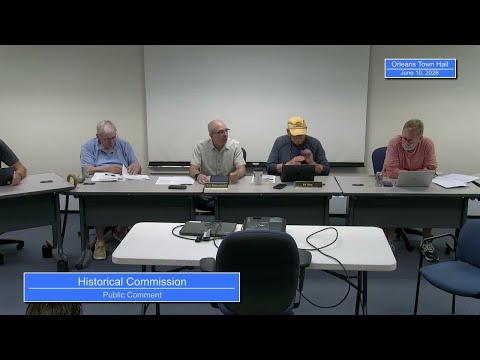
Orleans Historic Commission to pursue demolition-by-neglect enforcement and consider bylaw changes
Summary
Commissioners discussed Chapter 106 enforcement (section 1064C), including negotiating repairs, court orders, and maintaining lists of at-risk properties; members agreed to invite the building commissioner to a future meeting and to explore bylaw updates (possible longer delay period and simplified definitions) with public engagement.
The commission spent a substantial portion of the meeting reviewing Chapter 106’s demolition-by-neglect provisions and the practical steps the commission can take if a significant building is being allowed to deteriorate. The bylaw allows the commission to hold a public hearing, request inspections by the building inspector, negotiate voluntary repair agreements, and, if negotiations fail, seek court orders to compel repairs or stabilization.
Members said enforcement has rarely been pursued in the past and agreed the commission should be proactive. The group asked staff to invite the building commissioner to a future meeting to clarify: what records exist (for example, lists of unoccupied residential buildings), how inspections are handled, and whether the town will support the legal work required to enforce court-ordered repairs. One commissioner noted a current vacancy in the building-inspector position and recommended inviting the acting commissioner to ensure alignment.
Separately, commissioners discussed possible bylaw amendments to the demolition-delay rules. Ideas raised included extending the delay to 18 months (from 12) and simplifying the definition of a “significant building” (for example, moving to a 75-year cutoff rather than the current 1920/1925 language that some members found confusing). Commissioners emphasized the need for public engagement, a consultative process with select board and town counsel, and sufficient lead time to prepare warrant articles for a future town meeting rather than rushing an amendment into the next meeting cycle.
Next steps: staff will invite the building commissioner/inspector to the commission’s next meeting, compile a short list of candidate properties for focused visual inspection, and develop a draft timeline and scope for any proposed bylaw amendments, including outreach plans and a potential CPC-funded public-education component.