Get Full Government Meeting Transcripts, Videos, & Alerts Forever!
Get email alerts on the Event Permits topic
No spam. Unsubscribe anytime.
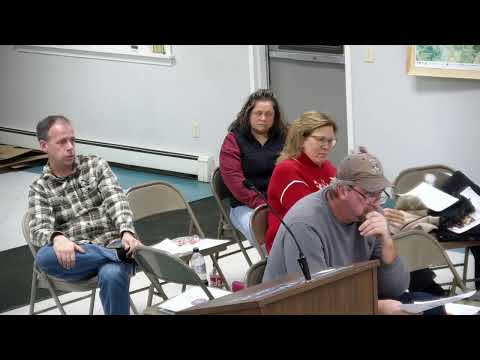
Limington planning board debates mass-gathering ordinance, bonding and permit rules
Summary
The Limington Planning Board reviewed edits to a draft mass-gathering ordinance that would require event permits for gatherings under 300, clarified when businesses with conditional-use permits must report events, debated bonds for private-property events, and set a January meeting to vote on revisions.
The Limington Planning Board spent its meeting reviewing a draft mass‑gathering ordinance and debating whether gatherings of fewer than 300 people should still require a simple event permit from the select board, even when they do not trigger a conditional‑use review.
The issue surfaced early as members worried the draft could sweep in private family gatherings such as weddings and reunions. One participant said the goal was to avoid requiring "conditional use permit[s] and pay[ing] all the fees" for routine private events, while still giving the town a straightforward way to know when larger gatherings occur.
A central question was which body should handle smaller events. Board members agreed on a working draft line that would read: gatherings intending to attract fewer than 300 participants do not require a conditional‑use permit from the planning board but must obtain an event permit from the select board. That compromise aims to preserve planning‑board oversight for large or business‑style venues while giving the select board a lighter touch role for accountability and safety checks.
The board used a local airfield as a running example. Planning‑board member Bob Uro said the operator of an established venue who holds an appropriate conditional‑use permit would not need to apply for a separate permit each time, but that events outside the scope of an approved business use should trigger a new review and could require bonding or other conditions: "he didn't need to come for a conditional permit every time he wanted to have a mass gather," Uro said, describing the intent to treat established venues differently from ad‑hoc gatherings.
Bonding and performance guarantees produced one of the sharpest debates. Supporters said a bond helps ensure cleanup and protects neighbors from nuisance impacts; opponents argued bonding private homeowners for one‑off events amounts to an unnecessary penalty and that civil remedies exist. The committee referenced a standard formula used by other towns to calculate bond amounts but did not set a specific amount in the draft; the actual bond level was noted as "not specified" and left to the select board's discretion if imposed.
Members also wrestled with exemptions for town‑sponsored events and the MSAD 6 school district. Several speakers recommended that the town and the school district go through the permitting process for safety reviews but be waived from paying fees, so recurring municipal events receive logistical scrutiny without costing taxpayer money.
The draft includes public‑safety and site requirements: applicants must post no‑parking signage on town streets as directed by the planning board, obtain state approval for signage on state roads, submit sanitation plans (the committee referenced an existing formula of one toilet per 150 attendees), and provide medical coverage plans ranging from first aid to EMS where appropriate. Committee members proposed that the Limington Fire Chief receive copies of applications and staffing plans so the department can recommend safety conditions.
Noise and hours were tightened in the revisions. The draft aligns with the town noise ordinance and specifies a 70 dB reference; it also proposes that most mass gatherings not convene before 7 a.m. or continue past 10 p.m. Members noted exceptions will be necessary — for example, the Honor Fishing Derby traditionally begins pre‑dawn — and said the permit should allow special conditions for longstanding community events.
On law‑enforcement notification, the draft will require applicants to inform the governing law‑enforcement agency; participants discussed notifying the Maine State Police because that agency covers the area. The board also agreed to edit procedural language to reduce redundant wording, clarify who receives application copies, and fix minor spelling errors.
Next steps: the planning board agreed to meet on the first Monday in January to vote on the revised language, with staff asked to circulate a corrected draft beforehand so the document can be forwarded to the town administrator by mid‑January.
The meeting concluded with the public portion closed and a motion to adjourn that was moved and seconded; the transcript does not record a roll‑call vote on the adjournment.
Sources: Draft ordinance discussion and public input during the Limington Planning Board meeting (transcript).