Get Full Government Meeting Transcripts, Videos, & Alerts Forever!
Get email alerts on the Wildfire Preparedness topic
No spam. Unsubscribe anytime.
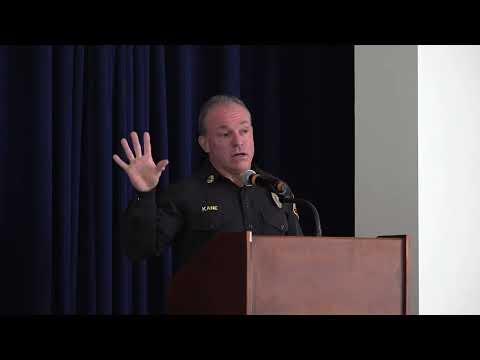
Assistant Chief Brian Kane outlines wildfire readiness and evacuation plans for Rancho Palos Verdes City
Summary
Assistant Chief Brian Kane of the Los Angeles County Fire Department told Rancho Palos Verdes City residents that most Southern California wildfires are human-caused, described red-flag thresholds, reviewed county first‑alarm resources including helicopters and helipods, and urged use of Alert South Bay and Genesis for evacuation guidance.
Assistant Chief Brian Kane of the Los Angeles County Fire Department spoke to Rancho Palos Verdes City residents about wildfire preparedness, response capabilities and how people should use local alert systems during an incident. Kane identified fire-weather thresholds, described the county's first‑alarm aircraft and ground resources, and urged early evacuation preparation for peninsula neighborhoods.
Kane said "90% of wildfires are started by some type of human intervention," noting Southern California has relatively little dry lightning. He explained a fire-weather watch—issued 24 to 72 hours before hazardous conditions—as a signal to curtail outdoor activities that can create sparks. A red‑flag warning indicates active hazardous weather; Kane defined the typical conditions as winds above about 25 miles per hour combined with relative humidity under roughly 15 percent, calling such combinations "ripe for wildfire." He advised residents to avoid gardening and to be cautious about where they park during red-flag conditions.
Kane outlined how evacuations will be managed on the peninsula, where narrow, winding streets and limited access complicate routing. He warned that waiting for an evacuation order often creates congestion that hinders emergency response and recommended acting on evacuation warnings and app guidance: "Level three, go now," he said of the immediate evacuation instruction. Kane emphasized that evacuations must be timed to allow emergency apparatus to enter and operate effectively.
For resident notifications, Kane recommended two platforms: Alert South Bay (mobile alerts for incidents) and Genesis, a zone-based mapping and notification system that displays color-coded zones and can show evacuation warnings and orders. He said Genesis will be used operationally by fire and law-enforcement partners to declare which zones are evacuated or warned and that a public-facing map and a blue-dot location feature help residents confirm their zone.
Describing operational resources, Kane said LA County Fire's first-alarm response is intentionally large to compress time to arrival: multiple helicopters (three on initial response), leased seasonal Super Scoopers and CalFire fixed-wing aircraft are launched as part of the initial dispatch when a brush fire is reported. He described ground resources as well—17 paid fire camps with four paid crews per camp for hand-line containment, dozer teams (two staffed 24/7, scalable to five), water tenders (about 2,500 gallons each) to resupply engines (about 500 gallons), off-road patrol vehicles (roughly 250 gallons) and a new four-wheel-drive district engine capable of pumping high pressure over long distances.
Kane highlighted air-operations capabilities: about 1,200-gallon helicopters, including converted Black Hawk "Firehawk" helicopters used for water drops and hoist rescues, and recently installed freshwater helipods on the peninsula that automatically refill from hydrants or reservoirs to avoid relying on ocean water. He explained two reasons to prefer freshwater helipods over ocean water: salt corrosion of aircraft and the ecological harm of dropping saltwater on vegetation. Kane said the new Metropolitan Water District–funded helipod at a nearby reservoir is part of an effort to position multiple helipods roughly five miles apart so helicopters can meet optimal three- to five-minute load-and-return intervals.
Kane closed by noting a recent three-day large-scale exercise on the peninsula that tested readiness and interagency coordination and said he would take questions focused on readiness and fire response.
The presentation did not include any formal votes or policy decisions; it was an informational briefing. Kane urged residents to register for Alert South Bay and Genesis, prepare go-bags, gather documents and pets, and act on warnings to reduce traffic congestion and improve emergency access if an incident occurs.