Get Full Government Meeting Transcripts, Videos, & Alerts Forever!
Get email alerts on the Hydrant Meter Policy topic
No spam. Unsubscribe anytime.
Contractor John Simpson questions CBU hydrant-meter deposit and locator practices
Summary
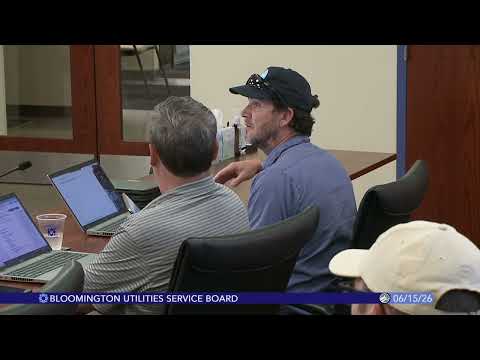
Contractor John Simpson told the Utility Services Board he was using a personal meter to wet-cure a city crosswalk and was later told he could not; he challenged a claimed $5,000 deposit and said the city's communications and locating practices created confusion and work delays.
John Simpson, a contractor working on a Parks and Recreation crosswalk project on Roger Street, told the Utility Services Board on June 15 that crews used a personal meter at a nearby hydrant to wet-cure pavement and later were told that practice was not permitted.
Simpson said a locator’s intervention escalated the situation after his crew had valid dig tickets and that the utility then told him he would need to post a $5,000 deposit to obtain an authorized meter. “I pulled the invoice from when I bought mine. It was less than 300 bucks. So I felt $5,000 was excessive,” Simpson said.
Board members and staff questioned Simpson and reviewed the utility’s position. A CBU staff member said the current cost for a lockable meter assembly is $3,950 and that the website still lists a $2,600 deposit for a lockable box; the staff member said the utility restricts private meters because of safety and backflow-protection concerns. “We don't allow private meters with backflow prevention devices on them just as a safety issue,” the staff member said.
Staff described how the locked meter or lock box is intended both to protect the public water supply and to ensure accurate measurement and billing; staff said deposits are refunded when equipment is returned. Board members noted logistical challenges: Simpson said his meter showed roughly 900 gallons and he estimated using 400–500 gallons, and he expressed reluctance to post a large deposit to a city that he said had been slow to pay him for prior work.
The board also discussed locating practices after staff explained that a locate-ticket depth field had been set to zero in one record, which led a locator to conclude no deep digging was planned; when crews later dug, another long-tenured employee inspected and flagged concerns. Staff emphasized the difficulty of coordinating locates amid dense subsurface utilities and recent fiber installations.
The chair thanked Simpson for bringing the issue forward and encouraged continued coordination between contractors, Parks and Recreation and utility staff to reduce disruptions and ensure safety. No formal change to meter or deposit policy was made at the meeting.