Get Full Government Meeting Transcripts, Videos, & Alerts Forever!
Get email alerts on the Transportation Paving topic
No spam. Unsubscribe anytime.
Newark council presses administration on years‑long paving delays, PSE&G coordination and truck enforcement
Summary
Council members pressed the administration and engineering director over repeated delays in municipal paving, staffing shortfalls, utility-driven re‑digging of newly paved streets, and the city’s plan to pursue stronger enforcement of overweight truck routes and coordination with PSE&G and state police.
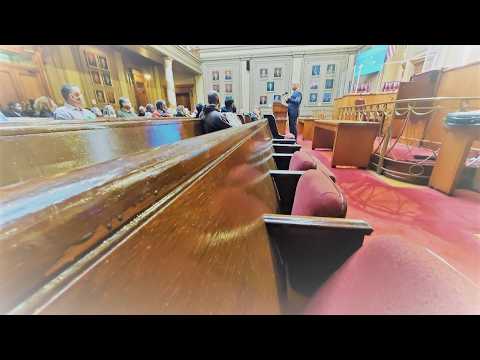
Council members pressed the city’s administration on June 16 about repeated delays in street paving that have left many Newark neighborhoods waiting years for repairs.
At a municipal council meeting, James Adams, acting director of engineering, told members that municipal‑aid projects such as MA2024 follow a two‑ to three‑year cycle from state approval to actual paving because of in‑house design, utility coordination and review by the New Jersey Department of Transportation. Adams said the 2027 program work likely will not begin until 2029.
That explanation did not satisfy several council members, who said some streets have gone a decade or more without repaving and asked why lists of priority streets submitted to engineering have not been executed. Council members pointed to staffing shortages in the traffic and signals division — Adams said the division is down two engineers — and urged the administration to provide written updates ahead of budget hearings.
Business Administrator Eric Pennington told the council that paving typically costs about $1 million per mile and the city depends heavily on state municipal aid; he added that exceptional multi‑agency efforts such as recent lead service‑line replacement work allowed the city to pave several times the usual mileage in those years. Pennington said additional funding will be needed to address the backlog and recommended a deeper budgetary review.
Council members also pressed the administration on the recurring problem of utility contractors digging up newly paved streets. Panelists referenced PSE&G’s ongoing gas‑line replacement program and said the city believes the company has not been consistently complying with curb‑to‑curb repaving requirements after trenching. The administration said it will meet with PSE&G and regulatory representatives and pursue remedies, including enforcement of existing ordinances and discussions with outside counsel in egregious cases.
Several members proposed more aggressive approaches to limit pavement damage, including requiring developers and large trucking tenants to contribute to a paving fund, improving enforcement of designated truck routes, and working with state police to establish weighing stations for overweight vehicles on high‑impact corridors such as Duris/Daris Avenue and Lansancy Street.
The council recorded planned follow‑ups: a written memo on staffing and timelines for paving projects, further discussion during budget hearings about dedicated funds or bonding for paving, and a meeting with utilities to clarify paving and repaving obligations. The meeting also advanced two bid contracts for pavement markings and a paving project. The council moved to executive session later in the meeting where other settlement items were placed on the agenda.
The administration said it will provide the council with the requested street lists, a timetable of projects and documentation of its coordination with state agencies and utilities.