Get Full Government Meeting Transcripts, Videos, & Alerts Forever!
Get email alerts on the Land Use topic
No spam. Unsubscribe anytime.
Cabot council remands Buckman Brew House appeal after hours of debate over parking and ADA access
Summary
After hours of testimony from business owners, residents and staff about downtown parking ownership, ADA access and shared-parking rules, Cabot City Council voted 5–4 to send the Buckman Brew House special-use application back to the Planning Commission for further consideration.
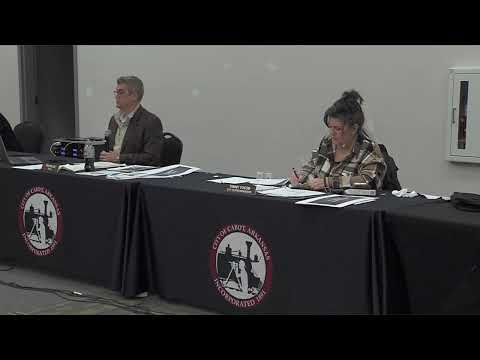
Buckman Brew House, a family-owned, woman-owned proposal to renovate the city-owned Old Firehouse into a brewery and restaurant, will return to the Planning Commission for further review after the Cabot City Council voted 5–4 to remand the application.
The council’s action followed more than two hours of public testimony and technical debate Tuesday night over whether the project met the city’s Unified Development Code parking and accessibility rules. Ranna Smith, a Buckman owner, told the council the applicants had met the city’s site requirements and had an agreement with the city for the 34 parking spaces they said the code required. “We met all the legal requirements and criteria laid out by the Cabot city code,” she said, urging the council to reverse the Planning Commission’s denial.
Property owner Patrick Malikian strongly disagreed, telling the council the alley behind his building provides the only ADA-accessible parking for his law office and tenants and that closing or restricting vehicle access there would leave his building without compliant parking. “If my ADA parking is removed, that’s going to open me up as the building owner to any type of lawsuits,” Malikian said, arguing the city could be asked to pay to restore access.
Planning staff, council members and the applicants disputed how to count and locate required spaces under city code. City staff cited UDC provisions on shared-parking agreements and off-street parking that limit use of third-party spaces; one section discussed in detail was the code language that precludes relying on shared parking to meet more than 30% of a requirement and requires on-site or contiguous access. City engineer presentations and architect drawings shown at the council meeting projected that restriping and site improvements could increase the district’s public parking supply, and the applicants presented photographs and a community poll as evidence of available parking outside peak periods.
Several council members said they found merit to both sides. Some members said the Planning Commission had identified parking and access concerns as the basis for denial but had not listed specific code sections when it voted; staff told the council the code does not require planners to list exact sections on a discretionary special-use decision. After a tie on a motion to affirm the Planning Commission’s denial, the council voted to remand the application so the Planning Commission can reconsider the item with the new materials and testimony presented at the council hearing.
The remand is procedural rather than a final approval; the Planning Commission must now re-evaluate the special-use permit with the additional information and may reaffirm, reverse or modify its prior decision. The mayor and staff said the remand could be scheduled for the next Planning Commission meeting if the applicants submit any required materials in time for the public notice period.
The appeal prompted broader discussion of a downtown concept plan presented by a city-hired engineer, which showed options for an art walk, additional crosswalks and restriping that staff said could increase the existing downtown lot from about 75 to roughly 90 spaces in the proposed configuration. Opponents argued that, as of today’s conditions, the required parking and safe ADA access were not yet demonstrably in place and that the council should not base a zoning variance on future improvements that might require substantial public investment.
The council’s remand preserves the Planning Commission’s role to balance technical code standards with the public interest and allows both applicants and opponents to refine evidence. The council also signaled support for downtown revitalization generally, while noting that approvals must be reconciled with current site conditions and applicable development codes.
What happens next: the council voted to remand the appeal to the Planning Commission; the Planning Commission will reconsider the application at a future meeting after staff and the applicant provide any additional documentation required for public notice and evaluation.