Get Full Government Meeting Transcripts, Videos, & Alerts Forever!
Get email alerts on the Language Access topic
No spam. Unsubscribe anytime.
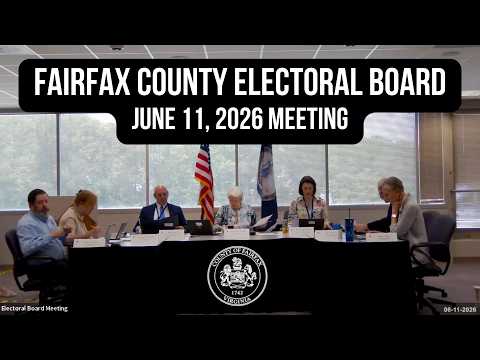
Fairfax County electoral board approves pilot translating sample-ballot materials into seven additional languages
Summary
The Fairfax County Electoral Board voted to pilot translated sample-ballot booklets in seven additional languages for the November election and required materials to clearly mark the effort as a temporary pilot pending state ACS/section 203 determinations. Board members flagged legal and resource constraints and asked staff to track use.
The Fairfax County Electoral Board voted to approve a pilot to produce translated sample-ballot booklets in seven additional languages for the November election, the board said in a voice vote. The pilot languages approved were Arabic, Amharic, standard Chinese (Mandarin), Urdu, Dari, Farsi (Persian) and Nepali, in addition to English, Spanish, Vietnamese and Korean already provided.
Chair Kate Hanley said the county will label all materials clearly as a pilot that could change after the state releases implementation data and determinations later this year: "it is our intent and it will be clear in our literature that this is a pilot project" and may not be permanent. The board passed the motion and an amendment substituting Nepali for one packet language; the motion carried by voice vote.
Staff and board members debated whether to base language selection on the U.S. Census American Community Survey (ACS) citizen counts or more recent school-based counts. Board members noted the state’s statutory triggers (discussed in the meeting as a 3% or 5,000-voter threshold and section 203 determinations) and that the state has indicated it may not finalize implementation guidance until December. Members cautioned this timing could change local requirements and increase legal risk if the county misapplies the standard; the board asked staff to consult the county attorney as needed.
Electoral Office staff described two operational constraints driving the pilot’s scope: certified translation capacity and training and messaging for election officers and poll-site signage. Staff said translations must be certified, additional copies must be printed for each polling place and satellite, and election officers will need training to avoid confusion about what sample materials mean for voting. The board directed staff to track usage of the translated materials during the pilot to inform future decisions.
The board’s action requires staff to produce the translated booklets, post clear pilot language on outreach materials, and return with usage data and any necessary legal guidance after the state releases final determinations.