Get Full Government Meeting Transcripts, Videos, & Alerts Forever!
Get email alerts on the Urban Renewal Budget topic
No spam. Unsubscribe anytime.
Scappoose Urban Renewal Agency adopts FY 2026–27 budget after audit and grant adjustments
Summary
The Scappoose Urban Renewal Agency approved Resolution URA 1-26, adopting a $951,138 fiscal year 2026–27 budget that increases contractual services to fund a required external audit and moves some grant payments into the next fiscal year; board members asked for a consultant-led work session to revisit priorities.
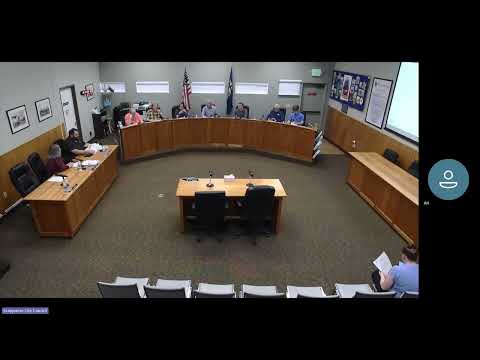
The Scappoose Urban Renewal Agency on June 15 held a public hearing and unanimously adopted Resolution URA 1-26, approving the fiscal year 2026–27 urban renewal budget set at $951,138.
Finance Administrator Carol told the board the adopted budget reflects three adjustments approved by the budget committee: an increase in contractual/professional services to pay for a required outside audit, an increase in the grants-and-loans line to account for grant payments that will occur next year rather than this year, and a reduction in contingency to offset those changes. Carol said the total appropriation remained $951,138.
The hearing drew no public testimony. Agent Sunzo moved to approve the resolution and Agent Han seconded; the board carried the motion by voice vote.
During discussion members said they want a focused follow-up conversation about urban renewal priorities and how the agency uses its tools. Several members urged scheduling a work session with county staff and the agency’s urban renewal consultant to review best practices and the existing plan so newer board members understand current priorities and constraints. Board members also suggested contacting the League of Oregon Cities for additional technical assistance.
Board and staff discussion also addressed why an outside audit is required this year. Carol explained that the agency’s expenditures have exceeded the $250,000 threshold that allowed staff to prepare reports in-house in prior years; the reservoir funding and related loan payments pushed the agency past that limit. Carol said audit costs and exact tax receipts are not yet firm and provided range estimates during the meeting; final audit costs will be determined once the engagement is scoped.
A board member asked about a previously raised concern from March 16 regarding property on the Columbia River (raised in the record by "Miss Haggus"). Meeting participants and staff said an internal review found the project has met program requirements to date. Staff emphasized that reimbursement will not occur until improvements meet applicable code requirements and any triggered building-code obligations are satisfied.
With discussion concluded, the board approved the budget resolution and closed the urban renewal portion of the meeting. Board members signaled interest in scheduling the consultant briefing and a work session at a future urban renewal meeting.