Get Full Government Meeting Transcripts, Videos, & Alerts Forever!
Get email alerts on the Local Budgeting Sales Tax topic
No spam. Unsubscribe anytime.
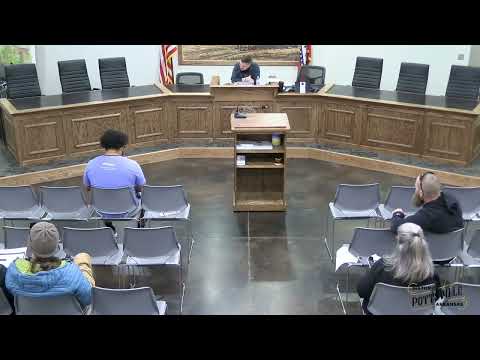
Presenter urges voters to broaden Pottsville's 1% sales tax use to fund streets, drainage and operations
Summary
At a Pottsville town hall, a city presenter said a March 3 ballot question would not raise the 1% sales tax but would allow the city to use existing collections for water/sewer operations, streets, drainage and general operating purposes; the presenter cited rising receipts, a 2021 revenue bond that remains paid from utility revenues, and promised oversight and transparency if voters approve.
A city presenter told a Pottsville town hall audience that a March 3 ballot measure would not raise the city's one-cent sales tax but would broaden the legal uses of the existing tax, allowing funds to support water and sewer operations, streets, drainage and general operating purposes.
"This is not a new tax. This is not a tax increase," the presenter said, stressing the vote is "strictly about how the existing tax can legally be used." The presenter said the tax has been on the books since 1999 and is currently restricted by ordinance 99-3 to water and sewer debt only. He said the ordinance and local financial structures no longer align with Pottsville's needs.
Why it matters: the presenter argued that sales-tax collections have risen substantially over the last decade and that the city can use the same revenue more flexibly to address streets and drainage shortfalls. He presented historical figures showing receipts rising from roughly $196,000 in 2015 to just over $440,000 in 2025 and said that trend demonstrates a stable base for longer-term planning.
Debt and legal limits: the presenter said Pottsville consolidated water and sewer debt into a revenue bond in 2021 and that bond is paid from utility-system revenues, not sales-tax receipts. He gave a consolidated-debt figure of $2.715 million with a maturity date of Dec. 1, 2035, and reported current payments of roughly $18,365 per month. "The way that it was passed as a revenue bond, tax dollars are not permitted to pay for this," he said, adding any change to accelerate payoff would require legal review.
How funds could be used: if voters approve the measure, the presenter said the newly permitted uses would include water and sewer department operations and expansion, streets, roads and drainage, and general operating purposes such as parks and some community outreach programs. He emphasized the rate would remain 1% and "no one pays more; the tax does not expand."
Timing and balances: the presenter said the city must clear administrative steps with the state Department of Finance and Administration before redirecting funds and that historically July has been the earliest practical date to start using funds after such a change. He estimated about $366,000 currently sitting in the water/sewer account and suggested the balance could grow to roughly $500,000 by July, but said funds collected earlier would remain restricted to their prior legal uses.
Streets, drainage and operations: presenters cited monthly averages used to illustrate funding gaps: about $26,675 per month from state and county sources for streets vs. roughly $36,695 per month from the city's one-cent sales tax. The presenter and staff described chronic drainage trouble spots (North D Street; Blue Bonnet and Day Road), plans for a citywide drainage study, and a proposal to buy a hot-asphalt "hot box" to allow more permanent patching rather than expensive cold-mix patching.
Oversight and transparency: the presenter said the city would keep a separate water and sewer account, continue contributions to that account, and pursue ordinances and internal controls to increase transparency on how sales-tax proceeds are spent. He promised regular updates and public reporting on projects should the measure pass.
Public questions: residents asked whether the measure would let the city pay off the 2021 revenue bond early. The presenter replied that the bond's structure currently prevents tax dollars from directly servicing it and that any acceleration would require counsel review and possible legal constraints. Another resident asked about voting logistics; the presenter explained how to view a sample ballot and that a vote "for" would allow broader use while a vote "against" would maintain the current restriction.
What happens next: the presenter said early voting begins tomorrow in nearby locations and that if the measure passes, administrative steps with state finance officials would follow; he reiterated that the tax rate would not change and pledged additional safeguards and public reporting on any spending changes.