Get Full Government Meeting Transcripts, Videos, & Alerts Forever!
Get email alerts on the Water Rates topic
No spam. Unsubscribe anytime.
Cherry Valley leaders warn water-rate increases needed to protect state and federal aid; town hall set for Feb. 17
Summary
Mayor and city staff outlined a statewide water-rate survey and recommended a 3% annual increase beginning in August to maintain grant eligibility and cover repairs; a town-hall meeting on Feb. 17 will let residents ask questions and provide feedback.
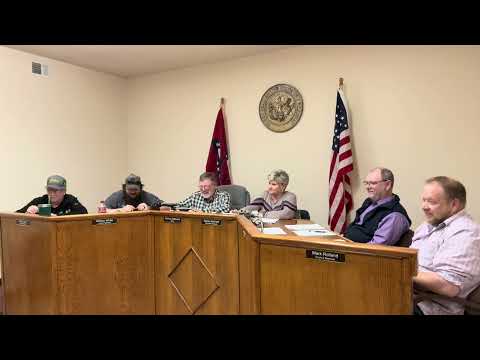
Mayor Dennis Stevens and city staff told the Cherry Valley City Council that the city’s recent water-rate study and state requirements make further increases likely, and they urged residents to attend a Feb. 17 town hall to discuss details.
“Failure to implement the raise we had in August of ’25 and failure to implement the 3% annual increases will result in a city just like a school being placed on a distressed list,” Mayor Dennis Stevens said, warning that such a designation could make the city ineligible for future state and federal assistance for water projects. He framed the recommendation as a way to protect access to grants for the planned water-treatment plant and pipe repairs.
Why it matters: Council staff said Cherry Valley has not raised rates in many years and faces a mix of aging infrastructure and debt that factored into the survey. The city reported an implemented minimum monthly rate of about $80.35 for the first 1,000 gallons and (as stated in the meeting transcript) a per-1,000-gallon incremental rate cited as “23.50” for additional usage; staff presented those figures as the current basis for future increases and recommended a 3% annual rise to account for inflation and maintenance costs.
Stacy (staff) and other officials outlined grant activity tied to the water program: the city has applied for a $168,000 grant to address remaining asbestos pipe, is under consideration for a roughly $500,000 grant for plant work, and expects other state/federal grants to support piping and tank repairs. Officials also noted $55,000 had already been received from FEMA for roadway work, which indirectly affects infrastructure budgeting.
Council members discussed timing and public messaging. Stevens said he recommended waiting until August to begin the 3% annual increases, partly to allow public outreach and a town hall; the council scheduled a public meeting for Feb. 17 at 6:30 p.m. to discuss the rate study and answer resident questions.
Staff emphasized the financial drivers for the recommendation: roughly $200,000 in legacy debt on the water system (a long-term USDA loan), recurring repair needs (recent pump and sewer repairs), and the calculation method used in the state’s required rate survey. Stevens said the city could face decreased eligibility for assistance if it does not implement recommended increases.
What’s next: The council will hold the Feb. 17 town hall to present details and collect resident feedback. Officials said they plan to revisit the timing of an annual 3% adjustment in August 2026 and will provide more detailed rate tables at that time.
Sources and scope: Quotes and figures in this article come from council discussion and staff presentations at the January meeting. Where numbers were read from the transcript with uncertainty (for example the per-1,000-gallon increment rendered as “23.50” in the transcript), the article reports them as stated and notes that staff will provide finalized rate tables at public meetings.