Get Full Government Meeting Transcripts, Videos, & Alerts Forever!
Get email alerts on the Economic Update topic
No spam. Unsubscribe anytime.
Virginia finance official says reforecast shows modest surplus but warns on inflation and job headwinds
Summary
Secretary Sickles told the Senate committee a May reforecast raised resources for the next biennium, with fiscal‑year‑to‑date revenues running ahead of forecast and a projected surplus of about $837 million, but he warned about inflation, a downward GDP revision to 1.6% and a loss of payroll jobs that weaken long‑term prospects.
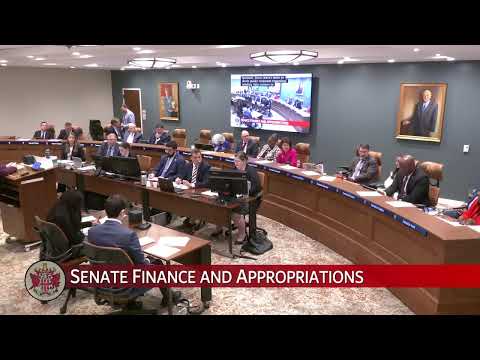
Secretary Sickles delivered an economic and revenue update to the Senate committee in Richmond, reporting that national GDP growth for Q1 was revised down to 1.6% annualized, U.S. payrolls rose by 172,000 in the prior month, and Virginia’s unemployment remained at 3.8%.
Sickles told senators that fiscal‑year‑to‑date general fund collections total roughly $29.892 billion toward a $32.4 billion target and that refunds and certain non‑withholding items have shifted compared with prior projections. Staff and the Department of Tax forecasters used the newest macroeconomic and collections data to produce a May reforecast that the Secretary said adds about $922 million of resources for FY27–28 and approximately $1.5 billion of additional resources available for the next biennium when combined with other adjustments.
Sickles cautioned that persistent inflation (he cited overall price growth near 4.2% year over year in the presentation) could prompt tighter monetary policy and risk slowing job growth, and he emphasized that reforecasted revenue driven by price increases (for example, sales tax growing with higher prices) may not reflect sustainable increases in real income. He said June is a significant month for final revenue collections and urged caution in budgeting decisions tied to volatile sources such as capital gains and non‑withholding receipts.
Senators followed with questions about what the ‘‘41,000 fewer jobs’’ figure measures (Sickles clarified it reflects a payroll jobs decline since the start of the fiscal year rather than the unemployment count), the composition of corporate income tax receipts, whether the secretary had participated directly in joint House‑governor conferee meetings (Sickles said he had frequent discussions with the governor’s office but had not been in a joint room with House and governor negotiators), and how the administration would handle contingency planning if a budget impasse threatened state operations.
Sickles concluded the economic briefing by saying the Commonwealth is in a relatively good fiscal position compared with many peers but reminded the committee that forecasts and collections are subject to revision and that the General Assembly must weigh the durability of those revenues as it finalizes appropriations.