Get Full Government Meeting Transcripts, Videos, & Alerts Forever!
Get email alerts on the Emergency Management topic
No spam. Unsubscribe anytime.
Prairie View holds emergency briefing as state disaster proclamation covers region
Summary
City staff briefed the Prairie View City Council on generator checks, fuel and water supplies, mutual-aid assets and plans to activate robocalls after Governor Abbott’s disaster proclamation; a public commenter warned that Ruby Street and the Alta Vista lift station are vulnerable to flooding.
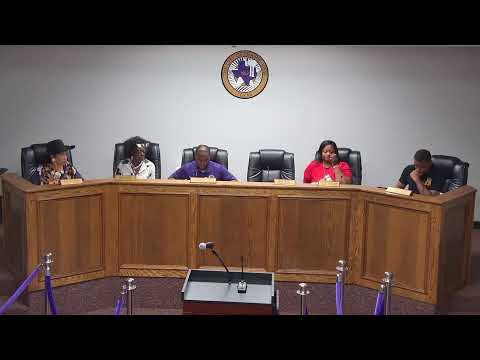
Prairie View — The Prairie View City Council met in an emergency session on severe-weather preparedness after Governor Abbott issued a disaster proclamation covering parts of Texas, including Waller County. City staff outlined checks of generators and backup systems at critical facilities, fuel and water planning, coordination with county and state partners, and the planned activation of the city’s robocall system to notify residents.
The briefing, presented to council members during the meeting, emphasized three aims: protect life and property, maintain continuity of government operations and keep water and wastewater services running. Staff said they were verifying operational readiness for generators and backup power at city hall, police, water and wastewater facilities; confirming fuel supplies; and placing police, public works, utilities, administration and finance on standby.
"We are currently verifying operational readiness and generators backup systems are servicing critical facilities," the presenter told the council. Chief Lopez of the Prairie View police department said his officers were on standby with boats and life-saving equipment and that the department maintains supplies for evacuations and welfare checks. "The police department is ready as usual," Chief Lopez said.
Special counsel briefed council members on legal context, saying the governor’s declaration opens state resources and that staff would continue to receive daily state briefings and coordinate with Waller County emergency management. Council member Manuel asked about funding; staff said no city-specific emergency dollars had been allocated yet but that a governor-declared disaster typically enables state resources and can unlock federal and state aid.
The presenter said the city will activate its robocall system "today" to reach residents and will use the city website, social media and emergency notifications for updates. Staff also described plans to compile a list of residents who may need extra assistance during an emergency so welfare checks can be prioritized.
Public comment flagged local vulnerabilities. David Allen, who identified himself as a resident and spoke during the public-comment period, urged the council to keep police and public-works staff physically present in the city rather than on call at home because inundated roads could prevent responders from reaching the city. Allen warned that Ruby Street lies in a FEMA floodplain and that city facilities are at risk. He also said the electric panel at the Alta Vista lift station is outdated and "processes 85 to 90% of the sewage in the city," which, he argued, could create a hazardous situation with state regulators if it fails.
Council members asked staff to add post-storm debris collection and coordination with the city’s trash contractor to the emergency plan and to ensure staff can transition to remote work if necessary. Miss Johnson and other staff were asked to prepare communications and continuity measures including laptops and remote access for essential business functions.
No formal emergency ordinance or budget appropriation was taken during the meeting; staff recommended that council authorize emergency preparedness and spending as needed if conditions worsen. The council adjourned the emergency meeting after a motion from Councilman Ducet that was seconded and carried by voice vote. Council members and staff said they would continue coordinating with Waller County and the Texas Department of Emergency Management and provide updates to residents.
Next steps: staff will finalize lists of vulnerable residents, confirm generator and fuel readiness, coordinate sheltering options with Waller County and prepare public notifications via robocall and social media.