Get Full Government Meeting Transcripts, Videos, & Alerts Forever!
Get email alerts on the Iran Deal topic
No spam. Unsubscribe anytime.
Trump says Iran memorandum bars nuclear weapons, warns U.S. will use force if terms are broken
Summary
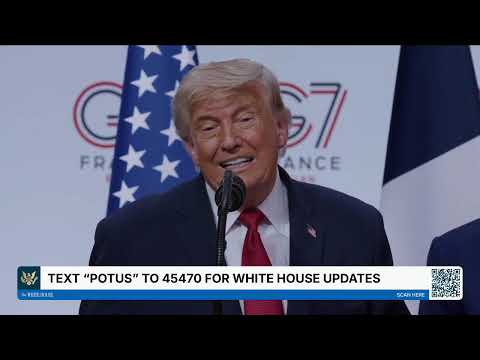
At a G7 press briefing in Evian, President Donald Trump described a memorandum of understanding with Iran that he said would prevent Tehran from developing or procuring nuclear weapons and warned the U.S. would resume strikes if Iran failed to comply.
President Donald Trump said at a G7 press briefing in Evian that a memorandum of understanding with Iran commits Tehran to "never have a nuclear weapon" and that the United States would resume military strikes if Iran violated the agreement.
Trump framed the arrangement as distinct from the Obama-era JCPOA, which he called a "road to a nuclear weapon," and said allied leaders had discussed and largely supported the approach. "They can't develop it, buy it. They can never have a nuclear weapon," he said, adding that the agreement could be signed "shortly, tomorrow, maybe the next day." He described the document as a memorandum of understanding and said a 60-day window would precede further action: "If it doesn't get done in 60 days, that's all right, we go back to bombing," he said.
The president portrayed enforcement as a combination of sanctions, allied pressure and, if necessary, military action. Asked whether the deal contains enforceable provisions, Trump replied that the United States would rely on leverage and, if Iran violated the terms, "we're going to bomb the hell out of you," a remark he repeated in response to follow-up questions. He also criticized the earlier JCPOA for allowing Iran access to funds and said the current agreement removes that pathway.
Trump tied the diplomatic development to economic indicators, saying markets rose and oil prices fell as the possibility of a deal emerged. He told reporters that allied leaders including France's president and India's prime minister had been engaged in talks and that the United States had shared the agreement text with Israel.
The administration described the instrument at the briefing as a memorandum of understanding rather than a treaty or formal accord; Trump said it could be finalized quickly but repeatedly emphasized that military force remained an option if Iran did not abide by the terms. The press conference did not include legal texts or a detailed enforcement plan, and Trump's statements about future military steps were presented as his policy intent rather than a description of legally binding mechanisms.
Next steps reported at the briefing: the memorandum of understanding may be signed in the coming days, and the administration intends to coordinate with allies on monitoring and enforcement. Reporters pressed for details about timing, what U.S. funds (if any) would be released and what formal safeguards would prevent Iran from selling oil or imposing fees; the president said releases would be conditional and framed sanctions and military deterrence as the principal enforcement tools.