Get Full Government Meeting Transcripts, Videos, & Alerts Forever!
Get email alerts on the Municipal Budget topic
No spam. Unsubscribe anytime.
Novak presents slimmer budget; council schedules committee work after staff says deeper cuts would mean layoffs
Summary
Finance chair Mary Novak told the council staff trimmed the proposed tax increase to about 14.7 cents through timing of new hires and anticipated revenues; council members asked for more committee work after staff warned that further cuts would likely require layoffs and cancellation of seasonal services.
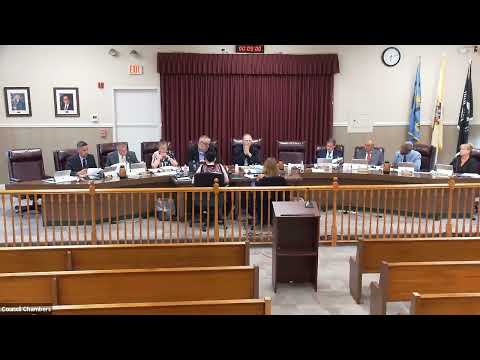
Councilwoman Mary Novak, the finance committee chair, told the council at a special budget workshop that town finance staff had trimmed the proposed property tax increase from earlier proposals to roughly 14.7 cents after identifying additional revenues and timing savings on recent hires.
"They were able to bring it down, like I said, almost another two cents without affecting any services at all," Novak said, citing a combination of anticipated revenue and timing of police hires. She told colleagues that staff had identified about $50,000 in anticipated revenue, $100,000 taken from the reserve for debt service and a projected $100,000 from delinquent tax collections that together supported the lower rate.
Town finance staff told the council work remains on a separate ordinance to reset sewer connection fees and water rates. Staff said the recommended approach would likely phase modest rate increases over multiple years so the changes have limited effect on the current fiscal year and are intended to begin producing revenue by 2027. The council was not presented with a final ordinance at the workshop and staff said calculations are still in progress.
Council members pressed for additional savings but were warned by staff and the auditor that the budget is already lean. A staff speaker explained that most remaining nonessential items had been removed and that further cuts would require scaling back services or personnel. Council members specifically discussed the tradeoffs between capital spending and operating savings: staff noted $3.2 million is budgeted for road resurfacing and removing paving this year would free an estimated $150,000—insufficient to materially change the tax rate.
Officials also discussed an $800,000 structural shortfall the town is trying to manage. Novak raised concerns that some large consumers or properties on pilot/tax‑exempt arrangements are not contributing proportionally to the shortfall and said the council should consider connection fees and other revenue sources even though those changes will not substantially lower this year’s gap.
A town official warned that if the council pursued deeper cuts to close the gap, temporary and seasonal employees would be the first positions affected. "If the decision is to shrink the workforce, the first place that gets laid off is all temporary help, which means summer camp," the official said, noting roughly 300 families rely on the town summer program for childcare. Council members cited those service impacts as a major disincentive to additional personnel cuts.
Councilwoman Novak said she would make a motion to approve the amendment reflecting the reduced rate but did not secure a second during the workshop. With no public commenters, the council opened and immediately closed the public portion. The finance committee — Novak (chair), Alberto Rios and John Sabrowski — agreed to meet before the next council meeting; the members tentatively scheduled a finance committee workshop for Thursday at 5:30 p.m. to try to reach consensus ahead of the next full council vote.
The chair closed the special meeting and signaled a short break before the regular meeting.