Get Full Government Meeting Transcripts, Videos, & Alerts Forever!
Get email alerts on the Wildfire Recovery topic
No spam. Unsubscribe anytime.
Forest Service outlines post‑2024 fire rehab: 700,000 seedlings planted and 5 million board feet removed
Summary
The U.S. Forest Service told Harney County officials it has completed large‑scale hazard‑tree mitigation, awarded stewardship contracts, started fence repairs and planted roughly 700,000 seedlings as part of 2024 fire rehabilitation, with further phases and sensitive‑area work planned next fiscal year.
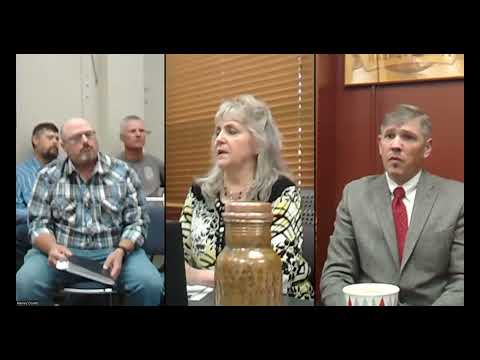
The U.S. Forest Service updated Harney County Court on June 17 about rehabilitation work after a series of 2024 fires, reporting extensive mitigation contracts, reforestation milestones and ongoing repairs across the forest.
Josh Giles, speaking for the Forest Service, said stewardship and commercial contracts have been awarded and that crews are working through multi‑phase projects. “Phase one covered roughly 49,000 acres; phase two about 9,215 acres,” Giles said, and added that roughly five million board feet of merchantable material have been removed under the contracts.
The presentation detailed separate fence‑repair efforts: county‑directed contracts cover roughly 180 miles of internal pasture and allotment fences, while a stewardship agreement with the Harney Soil and Water Conservation District will cover about 150 miles, mostly on another wildfire complex. Giles also described seeding and invasive species work and the purchase of native shrubs from the Umatilla tribes for visual‑corridor plantings.
“We’ve completed about 7,400 acres of reforestation efforts — roughly 700,000 seedlings — and expect to plant another 4,000 acres next spring,” Giles said, projecting that reforestation of moderate‑to‑high burn areas could take about nine years to reach planned targets.
County officials and attendees asked how quickly allotment land could return to grazing. Giles said the Forest Service is monitoring vegetation recovery and will allow permittees to return livestock when conditions safely permit, rather than waiting a fixed number of years. “We’re doing monitoring so we can get cattle back in sooner than a blanket five‑year removal if vegetation recovery allows,” he said.
Giles also outlined work in campgrounds and roads: a hazard‑tree sale and sale‑style commercial removal accounted for several hundred acres, and road repairs and stabilization contracts are underway. The Forest Service expects to solicit phase‑three contracts next fiscal year for sensitive areas requiring additional rehabilitation.
Why it matters: Harney County’s landscape and ranching economy depend on prompt repair of fences, roads and grazing infrastructure after large wildfires. The Forest Service presentation gives local officials timelines, identifies contractors, and frames needs for follow‑up coordination on grazing permit timelines and road‑repair priorities.
Next steps: Giles said the agency plans further solicitations and ongoing coordination with federal and local partners; county officials said they will continue to monitor recovery milestones and work with permittees and the Forest Service on grazing and infrastructure restoration.