Get Full Government Meeting Transcripts, Videos, & Alerts Forever!
Get email alerts on the Property Tax Relief topic
No spam. Unsubscribe anytime.
Evanston committee weighs expanding emergency assistance to cover property tax spikes
Summary
Council members discussed a proposal to expand the health department’s emergency assistance program to cover property tax increases as short‑term emergencies; the recommendation would launch a $100,000 pilot, keep the per‑household cap at $2,000 and prioritize exhaustion of exemptions before payments.
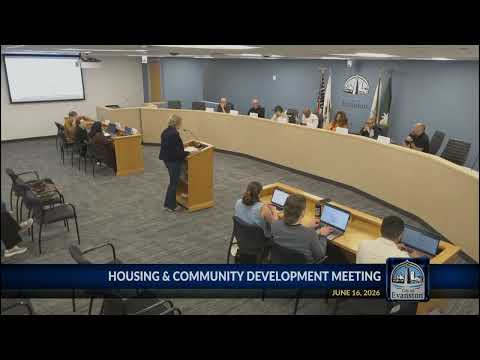
A council member asked the Housing and Community Development Committee on June 16 to consider expanding Evanston’s emergency assistance program to cover sudden property tax increases that create financial hardship.
Under the proposal staff described, the emergency assistance program — administered by the Health and Human Services Department — would allow property-tax increases that create an emergency to be eligible for up to $2,000 in assistance per household in a 12‑month period. The council member proposed an initial $100,000 to launch the expanded eligibility while a longer-term circuit-breaker style program is studied.
Members and staff raised several operational concerns. Director Ike Obo said property tax arrears can be in the thousands and that a one-time $2,000 payment may not fully resolve significant delinquencies; he also warned that delays in Cook County tax-processing data could complicate timely eligibility determinations. Community Development Director Sarah Flax urged staff to check homeowners’ deductions and the senior tax freeze before making a payment and noted Cook County has changed tax-sale procedures to limit predatory loss of homeowner equity, reducing one previously urgent risk for homeowners.
Committee discussion centered on the program’s preventive role (helping residents before they fall into tax delinquency), whether to carve out provisions for people already on the delinquency list, and where to source the $100,000 (members discussed the affordable housing fund, parked ARPA funds in the water fund, and other sources). Staff stressed that implementation would require time to set eligibility rules, data-sharing arrangements with Cook County, and a case-management approach so recipients also pursue exemptions and other available benefits.
The committee did not take a vote; members asked staff to work through implementation details and return the proposal to full council for a formal decision.