Get Full Government Meeting Transcripts, Videos, & Alerts Forever!
Get email alerts on the Public Safety Fire Fleet topic
No spam. Unsubscribe anytime.
Torrington fire chief warns of aging apparatus, rising maintenance costs and national supply issues; council weighs joining class-action efforts
Summary
Fire Chief David told the Torrington City Council the department’s fleet is aging, that maintenance and new apparatus costs have surged, and that parts and manufacturer consolidation have created supply‑chain risks; council discussed phased replacement, leasing options, interdepartmental cooperation and possibly joining national class-action litigation.
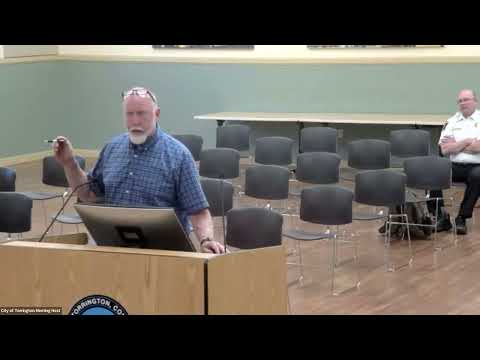
Torrington’s fire chief told city leaders on June 15 that the department is operating an aging fleet with rising maintenance bills, parts shortages and delays in new vehicle production — trends that he said pose increasing operational and fiscal risk to the city.
“We are in dire straits with our fleet,” Fire Chief David told the council during a condensed presentation prepared for the Vehicle Replacement Advisory Board (VRAB) and the council. He described frontline and reserve apparatus, NFPA service‑life expectations (roughly a 20‑year planning horizon), and mounting repair costs: the city has spent in excess of $400,000 on a single truck since 2015 and annual large repairs for older units have topped six figures.
The chief said industry consolidation has reduced competition for parts and services. “What we’re seeing nationally is that 70 to 80% of the market is held by three companies,” he said, adding that consolidation and factory closures have driven up parts costs and lengthened lead times for new apparatus. The chief reported that new engines and aerials now commonly cost substantially more than three years ago and that build times for new trucks can be two to three years.
Council members asked for specifics about out‑of‑service and reserve units; the chief said two trucks are slated for auction and that resale values will be limited given age and condition. He described collaborative approaches the department is pursuing to manage costs, including consortium testing and shared EVT (emergency vehicle technician) service across neighboring towns, leasing or phased replacement through VRAB to spread purchase costs over multiple years, and possible acquisition of another municipality’s older but low‑mileage apparatus as an interim reserve.
The national context reached local politics during the discussion: the chief noted class‑action litigation is under way in several states over allegedly inflated apparatus pricing. Several council members suggested preparing a standard question for candidates in the upcoming elections — and exploring whether Torrington should join or otherwise support municipal participation in any class action. One councillor said that if the suits show significant overpricing, municipalities should consider joining to recoup amounts or to exert political leverage.
Council members asked the chief to return with additional information on the litigation and options for municipal participation, and to provide a prioritized replacement schedule that aligns with VRAB and budget planning.
The presentation closed with a request for council support for phased funding models and a stronger preventive‑maintenance and EVT strategy to reduce unscheduled downtime and safety risk. The chief emphasized that apparatus reliability affects public safety and that long lead times and limited parts availability make near‑term planning essential.
Next steps: chief to provide follow‑up detail on potential class‑action participation, a prioritized fleet‑replacement plan, and cost estimates for a phased replacement or leasing approach to present to VRAB and the council.