Get Full Government Meeting Transcripts, Videos, & Alerts Forever!
Get email alerts on the Flood Hazard topic
No spam. Unsubscribe anytime.
Planning Commission drafts flood‑hazard overlay changes to permit relocated park structures, accessibility measures and incidental signage
Summary
After public comment, the commission proposed definitions and nonconforming‑structure rules to allow replacement or relocation of band‑shell‑style structures, playground fences and portable facilities in the flood hazard overlay, while aiming to avoid increasing floodway impediments and requiring ANR review where needed.
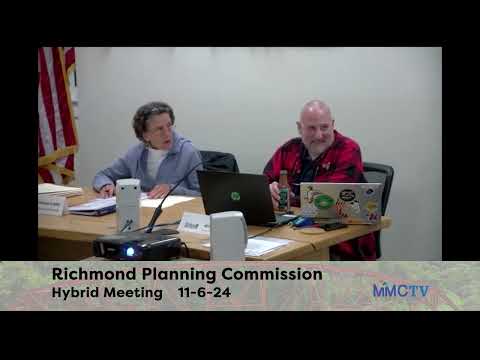
The Richmond Planning Commission reviewed public input Nov. 6 and proposed changes to the town’s Flood Hazard Overlay District to give the town more flexibility to restore or relocate park facilities while limiting impacts to flood flows.
Draft changes would add a definition for "open‑air recreational structure" (examples: band shell, pavilion, gazebo) so a replaced or relocated bandshell could be reconstituted as a pavilion or similar open‑air facility. Playground equipment would be treated as "structures" for zoning purposes, while small, nonpermanent items such as picnic tables, trash receptacles, kiosks and soccer goals would be listed as incidental structures allowed without a permit when they meet a modest footprint threshold (150 square feet or less).
The draft also expands the Development Review Board’s discretion for nonconforming structures: the DRB could permit relocation, reconstruction or reduction in footprint of an existing structure in the floodway but not enlargement that would increase the degree of flood hazard. The commission added a definition of "footprint" (area in contact with or directly above the ground) and a "degree of flood hazard" metric to make impact evaluations more explicit.
Commission members and parks volunteers raised design questions: whether a relocated restroom could be made accessible without increasing fill, whether safety fencing could be designed to let floodwater and debris pass, and whether portable toilets should be permitted as temporary or incidental structures. The draft language would allow a "reasonable degree of accessibility" (minimum ground improvements to achieve access where feasible) and permit low‑resistance or breakaway fencing designed to protect children while minimizing water impediment.
Fran of the Three Parks committee said the revisions "give us a lot of flexibility to do what we want to do up there" and asked that the DRB consider accessibility and design options. The planner noted some actions—moving or adding fill in the floodway, or altering a structure’s size—may require costly certifications (letters of map amendment or engineer review) and Agency of Natural Resources (ANR) signoff; those processes remain necessary where required.
Commissioners agreed to refine the draft, add incidental sign language, and revisit the overlay at the next meeting before forwarding a final proposal to the select board and ANR for formal review.