Get Full Government Meeting Transcripts, Videos, & Alerts Forever!
Get email alerts on the Behavioral Health Sud topic
No spam. Unsubscribe anytime.
County Commission previews Avalon proposal to add 4–6 social detox beds; funding and nonprofit impacts draw questions
Summary
Avalon Wellness and Recovery proposed 4–6 social detox beds and a six-month startup advance to Douglas County, offering to accept the federal block-grant rate; commissioners welcomed the idea of more capacity but raised concerns about prepayments, for-profit subsidy, and impacts on nonprofit peer positions.
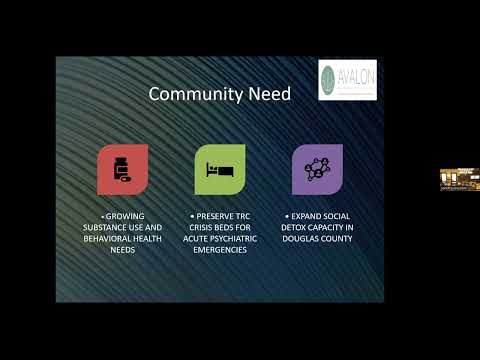
The Douglas County Commission on June 17 received a preview of a proposal from Avalon Wellness and Recovery to establish 4–6 social detox beds in the county, with Avalon seeking six months of startup funding and proposing to accept the state block-grant per-night rate for social detox.
Bob Transky, director of behavioral health projects, opened the work session by saying staff invited Avalon and local substance use disorder (SUD) partners to discuss whether a public–private model could expand local capacity and reduce pressure on higher-acuity hospital and TRC (Treatment and Recovery Center) resources. Staff emphasized that the presentation was a preview for the budget process, not an approval request.
Ken Vic, executive director of Avalon Wellness and Recovery, described a planned ASAM 3.2 (social detox) model with 24-hour supervision, on-site nurses, peer support and case management, and a focus on rapid warm handoffs to treatment partners such as DECA and MIR. “It is not about us trying to keep people,” Vic said, explaining Avalon’s intent to route clients to the next appropriate program rather than retain them in a private system.
Avalon’s proposal assumes a small unit (four to six beds), average stays of one to three days (often about two days), and utilization assumptions that translate to roughly 1,200 bed-nights a year for a four-bed model. Vic told the commission he would collect detailed demographic and outcome reports during a six-month startup period and that reimbursements would follow the initial pilot phase.
Partners at the table provided data and context. Ryan Storch, senior director of crisis services at Burton Ash Crisis Services, presented a two-week TRC sample showing 14 individuals with a primary SUD diagnosis; after excluding those needing medical detox, he said “approximately five” in that sample were clinically appropriate for social detox, illustrating how clinical triage affects referral volumes. Kim Freeze of DECA reported annual peer-outreach figures for 2025: 141 peer contacts or calls, 76 people who entered detox, 55 who completed detox and 50 who went on to treatment; she said about 30 of those contacts were Douglas County residents and 16 admits were confirmed Lawrence residents.
DECA’s Lori Alvarado said DECA would not surrender its current women’s detox beds if Avalon were added and warned that a shift in county funds could affect peer positions funded through current contracts. “We would not be giving up our detox beds,” Alvarado said, while noting that some peer roles are funded through county reimbursements and could be displaced unless plans protect those positions.
Commissioners asked detailed operational and fiscal questions: whether Avalon currently operates dedicated social detox beds (Vic said he is licensed but does not have dedicated beds open in the proposed configuration), how Avalon would handle clinical escalations (Vic said Avalon would coordinate transfers to higher-acuity care if a client’s needs change), whether Avalon is Medicaid-qualified (Vic said credentialing was in final steps), and whether the county should make an upfront lump-sum payment or rely on a reimbursement model. Staff and partner presenters confirmed that the state block-grant per-night reimbursement rate is the standard for publicly funded social detox providers.
Several commissioners expressed reservations about using county dollars to subsidize a for-profit provider or making a large upfront payment. Others said the community needs more beds—noting a particular absence of men's social detox beds locally—and supported continued exploration if contracts preserved parity of services and payment structures across providers. Staff characterized the session as an early-stage conversation and said they would return with more detailed terms, metrics and contract options during the budget reestimate and upcoming budget hearings.
No formal action or vote was taken at the work session; commissioners asked staff to convene partners, including LMH and existing SUD providers, to work through referral workflows, data collection and contract safeguards. The Commission recessed until its 5:30 business meeting.