Get Full Government Meeting Transcripts, Videos, & Alerts Forever!
Get email alerts on the General Education Review topic
No spam. Unsubscribe anytime.
Board of Regents approves new general-education review after debate over academic oversight
Summary
The State Board of Regents approved a policy establishing a Board-level general education review after debate about whether such review crosses from governance into academic management. The vote was 5–3 following objections that the change could politicize course content.
The State Board of Regents voted June 16 to add a Board-level general education review to its policies, approving the change 5–3 after spirited debate about oversight and academic independence.
Regent Christine Hensley moved to adopt the policy and Regent Kurt Tjaden seconded. Regent Nancy Dunkel said she would vote against the change, arguing that “requiring the Regent office to review courses for DEI or critical race theory is the right way to achieve that. I don't believe it is.” Dunkel warned that inserting the Regent office into course review risks shifting the Board from governance into management and could create the perception that course content is subject to political review.
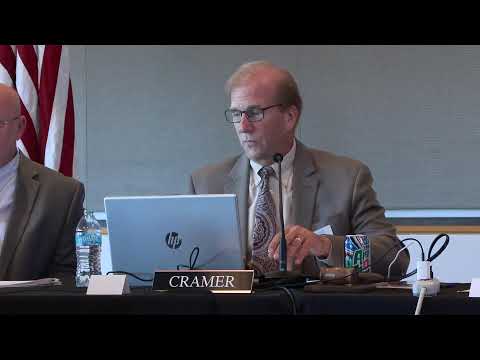
Board President Robert Cramer acknowledged those concerns but described the review as an information-gathering exercise prompted in part by legislative interest in what is taught in general education. He told the board the effort is intended to “find out what is going on” and stressed that it would not be used to cut classes, but rather to inform the universities as they implement new state requirements on civics and history credits.
In a roll-call vote, Regents Hensley, Tjaden, Peter Cownie, Steve Lacy and Robert Cramer voted yes; Nancy Dunkel, Greta Rouse and Lucy Gipple voted no. The board recorded that the review is meant to assess the current scope and DEI content of general education courses and to provide transparency to legislators and the public.
The board did not adopt any language in the meeting to require changes to specific courses. Cramer said universities would lead implementation and that the Board’s role would be to collect information and set expectations. No formal amendments or next-steps timeline beyond the policy adoption were specified in the meeting record.