Get Full Government Meeting Transcripts, Videos, & Alerts Forever!
Get email alerts on the Charter Revision topic
No spam. Unsubscribe anytime.
New Canaan council split over putting finance and planning boards to voters; ethics clause and catchall edits draw scrutiny
Summary
At its June 17 meeting the New Canaan Town Council split in straw polls over whether to ask voters to convert the Board of Finance and Planning & Zoning to elected or hybrid bodies, and debated whether to elevate ethics rules into the charter or to separate substantive edits from a 'technical and conforming' package.
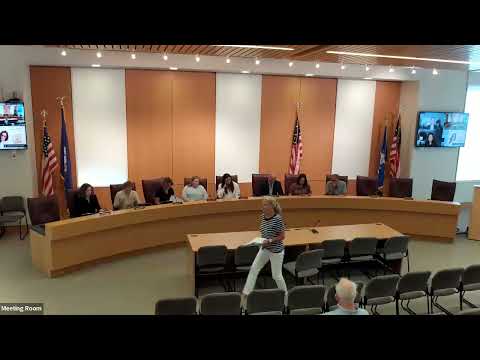
The New Canaan Town Council on June 17 took straw-poll votes and aired sharply differing views over whether the town should put changes to the structure of key boards — including the Board of Finance and the Planning & Zoning Commission — before voters, and whether to expand ethics language in the town charter.
The council’s informal votes followed a presentation of the Charter Revision Commission’s draft report and were intended to give guidance back to the CRC before its next meeting. Members split on several proposals: some favored asking residents directly if the Board of Finance should be elected rather than appointed, while others urged that the appointment system has produced knowledgeable, nonpartisan oversight and should remain in place.
Supporters of placing elections before voters framed the question as one of democratic legitimacy. Councilor Heather Russell said the change would let taxpayers decide who sets priorities. "What an election buys is the one thing appointment can never provide: democratic small-d legitimacy. When the people choose the board that taxes them, its decisions carry their consent," she said. Councilor Mike Rogers likewise called lack of direct electoral mandate a legitimacy problem, pointing to a contentious zoning case that was later overturned in court and arguing the people most affected had no direct say in who decided.
Opponents warned elections could politicize technical work and shrink the pool of experienced volunteers. During public comment, longtime resident Amy Murphy Carol urged retaining appointments: "With appointed, we get informed volunteers who understand the role of their boards, are vetted at multiple levels, and have all spent time with the current members of the boards that they're considering joining," she said. Councilor Jennifer Zanis and others described the current appointed system as a contributor to stable fiscal outcomes and public services.
Members discussed hybrid options that would preserve appointed expertise while giving voters a majority of seats. Several councilors asked the CRC to consider a model with a bare majority elected and remaining seats appointed (for example, five elected and three appointed on the Board of Finance) to balance accountability and expertise.
Ethics and the CRC’s so-called recommendation five — a broad set of "technical and conforming" edits spread across many charter articles — also drew prolonged debate. Councilor Kim raised audit findings and a recent constituent question about how recusals and conflicts are disclosed, urging the council to ask the CRC to consider elevating core disclosure and recusal practices into the charter so they are visible to voters. Other councilors and town counsel cautioned that inserting operational personnel rules and broad administrative-policy language into the charter could create conflicts with collective bargaining agreements and raise unintended legal issues. One example discussed: a long-standing property-ownership requirement for Board of Finance members that legal review flagged as likely unconstitutional; councilors sought clarity on whether that provision should be removed as a conforming change.
The council did not adopt formal amendments tonight; it registered informal straw polls on the five CRC recommendations (mixed results on term limits and the catchall edits; broad support for council confirmation of P&Z appointments and for requiring council approval of changes to town-owned real property). The CRC will reconvene and the town council will work with it on ballot language and public education. Kathleen (CRC chair) told the council the commission will publish summaries and conduct outreach so voters understand what each proposed change would do.
Next steps: the CRC meets next day to finalize its report and the council will review proposed ballot language. Any charter amendments must be presented to voters in a referendum before taking effect.