Get Full Government Meeting Transcripts, Videos, & Alerts Forever!
Get email alerts on the Cell Tower topic
No spam. Unsubscribe anytime.
Minnetrista council considers 150-foot cell tower lease near city hall
Summary
City staff presented a vendor offer for a 150-foot cell tower on city property near city hall: a two-year option ($2,000), a proposed base rent of $2,000/month with a 3% annual escalator, a 35-year term, and estimated lifetime revenue of $1.4–$1.7 million. Council pressed for shorter terms, market comparables and a public hearing/CUP.
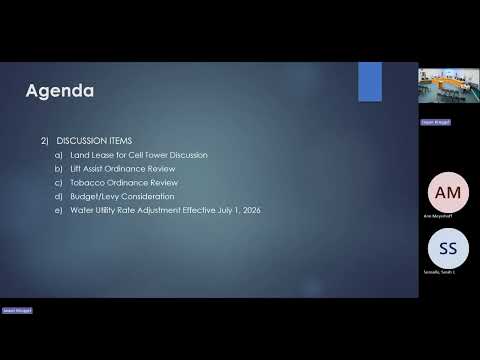
City staff brought a proposed land lease for a 150-foot cellular tower near Minnetrista City Hall to the June 15 work session, presenting financial terms and site considerations and asking whether council wishes staff to pursue a formal lease and the permitting process.
Jasper Krugal, city administrator, summarized the vendor offer: a two-year option with a $2,000 upfront payment to secure the option, an initial offered rent of $2,000 per month with a 3% annual escalator, a 35-year lease term, and an additional $250 per month for each extra carrier that locates on the tower. Krugal said the developer estimated between $1.4 million and $1.7 million in total rent revenue over the life of the lease, and that the tower would likely be built primarily for Verizon service with capacity for one to three carriers.
Councilmembers raised concerns about the length and price. "The first thing I'm leery about is signing a 35-year lease," a councilmember said, arguing the city should seek shorter terms or staged renegotiation points. Several councilmembers asked staff to seek comparables from neighboring jurisdictions and to try to negotiate shorter initial terms or market check-ins every 10–15 years so the city could renegotiate if the local market strengthened.
Members also debated siting: staff indicated public works prefers a location west of city hall tied to an existing access road, but councilmembers noted that the preferred site is adjacent to a septic drain field and wetlands and could be visible to nearby residents. The council discussed whether to require the developer to go through a conditional use permit (CUP) process — which would trigger a public hearing and give neighbors an opportunity to comment — and who should pay permitting costs.
Councilmembers discussed alternatives to the proposed terms, including higher monthly rent, staged escalators tied to market reviews, or a shorter primary lease (10–20 years) with explicit renegotiation windows. Staff said permit fees for construction would likely be in the $10,000–$15,000 range and that the vendor had been negotiating with the city for roughly a year.
The council gave staff direction to return with additional negotiation parameters and comparables rather than approving the lease on the spot; staff will report back with options for shorter terms, market-check clauses and CUP/public-notice procedures.
The next procedural step is for staff to take council feedback to the vendor, and if a lease is negotiated, to outline a permitting and public-comment schedule for council review.