Get Full Government Meeting Transcripts, Videos, & Alerts Forever!
Get email alerts on the Historic Building Windows topic
No spam. Unsubscribe anytime.
Historic commission splits on replacement of leaded‑glass bay window at 852 Neil Avenue
Summary
Commissioners approved replacement of most windows at 852 Neil Avenue but continued a decision on the prominent first‑floor leaded‑glass bay window to allow the applicant and staff more time to explore repair or replication options.
The Victorian Village Historic Commission on June 8 approved most of a window‑replacement plan for 852 Neil Avenue but deferred a decision on a prominent first‑floor leaded‑glass bay window so the applicant can pursue repair options.
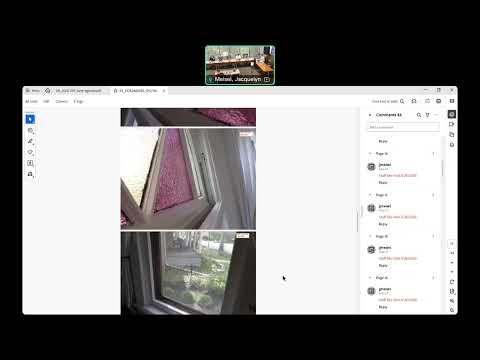
Staff presented a detailed review of the property’s windows, telling the commission that most first‑floor windows appear to be original and repairable while identifying a later lower sash and another full window as 20th‑century replacements. Staff recommended Option B: replace windows using products from the approved windows list while retaining any historic upper sash of the leaded‑glass bay window. Jacqueline Meiselle, Historic Preservation staff, summarized staff’s recommendation and the relevant code standards and guidelines.
Commission discussion focused on balancing preservation against the applicant’s desire for consistent one‑over‑one replacement windows. "Our recommendation is to retain and repair" the leaded sash, Meiselle said, noting the window’s role as a character‑defining feature. Several commissioners said the stained‑glass bay is visually prominent and should be preserved where feasible.
Commissioner Kevin Parzik urged a cautious approach: "I will say right off I’m inclined to say to retain the first‑floor windows with the exception of the one and a half that are later replacements," he said, advocating retention of the bay window if the historic upper sash can be preserved or repaired.
Because of the technical complexity of removing or repairing the fixed upper sash and uncertainty about what treatments Franklin (the contractor referenced in discussion) could accomplish, the commission split its action. It voted to continue consideration of the central first‑floor bay window (part A) to give the applicant time to evaluate repair, sash‑pack replacement, or an approved replication approach. The commission approved the rest of the application (part B) — replacement of other gable and upper windows per staff’s Option B — with conditions that gable openings not be altered and that the side leaded‑glass window be retained.
Next steps: the applicant will return with additional documentation or allow staff to review product and repair proposals for the bay window. The continued item will come back to the commission if staff finds the candidate repair or replication unacceptable.