Get Full Government Meeting Transcripts, Videos, & Alerts Forever!
Get email alerts on the Climate Program Update topic
No spam. Unsubscribe anytime.
Charlottesville officials report slight rise in 2024 emissions while outlining local climate projects
Summary
City sustainability staff told council that Charlottesville’s 2024 greenhouse‑gas inventory is up about 4.8% from the prior year, cited transportation and grid changes as drivers, and highlighted local projects — including school and municipal solar, EV planning and an expanded Energy Resource Hub — aimed at reversing the trend.
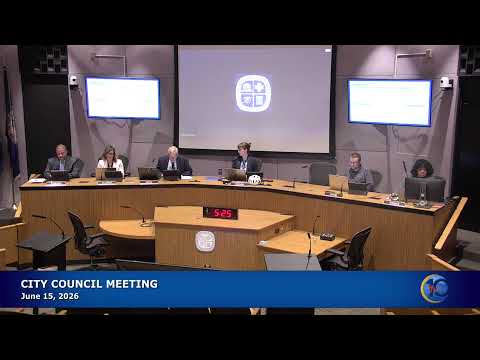
Charlottesville — City sustainability staff on June 15 told the Charlottesville City Council that the city’s most recent greenhouse‑gas inventory (reporting year 2024) shows community emissions rose about 4.8% from the prior year and that municipal emissions increased roughly 9%.
Crystal Ritter, director of the Office of Sustainability, opened the work session by restating the city’s climate targets: a 45% community emissions reduction by 2030 and carbon neutrality by 2050, and she framed the work as a mix of mitigation and adaptation that requires both government action and broad community participation. "We're working with the goals of achieving a 45% reduction in our community greenhouse gas emissions by 2030," she said.
Emily Urban, the city’s climate program manager, said the inventory’s 2024 data show transportation and electricity trends as the principal drivers of the recent increase. Urban noted travel returned toward pre‑pandemic levels and vehicle miles traveled shifted toward more light‑ and heavy‑duty trucks, which emit more per mile. "One driving factor in rising emissions is the shifts that we're seeing in the transportation sector," she said.
Urban also described a change in regional electricity generation between 2023 and 2024 that increased the grid’s emissions intensity: generators used more natural gas to meet rising demand, which offset some benefits of local electrification. She said the electricity data used in the inventory come from Dominion and other regional sources and that the inventory is a year behind (2024 data presented in 2026), so some recent local projects are not yet reflected.
Staff highlighted recent and planned local projects intended to reduce future inventories: the K‑Tech rooftop solar array (263 kW, 478 panels) is online and has produced more than 200 MWh to date; two larger school solar installations at Charlottesville High School and Charlottesville Middle School are contracted and together will total about 2.2 MW, which staff estimate could avoid nearly $4 million in electricity costs over a 25‑year term once Dominion completes interconnection work.
On municipal operations and fleet electrification, staff said an analysis identified roughly 155 light‑duty municipal vehicles as candidates for replacement and that a five‑year plan has prioritized 45 vehicles for EV replacement by FY2031; six EVs were purchased in FY26. Urban said vehicle replacement will follow lifecycle schedules and that the city is planning charging infrastructure where vehicles are parked.
The update covered community programs as well. Staff described an e‑bike voucher program that issued 112 vouchers in its first year (90 redeemed) and was redesigned into a three‑tier structure to increase equity (Tier 1: $500 for all; Tier 2: $1,000 for households ≤80% AMI; Tier 3: $1,500 for certain benefit recipients). The Energy Resource Hub — a partnership linking city, county, LEAP and C3 — helped 178 city residents and 130 county residents in 2025 and provided audits, weatherization and a $2,000 residential mini‑grant among other services.
Urban also noted the city welcomed its first electric school buses (funded by the EPA Clean School Bus rebate) and said Dominion installed the DC fast chargers for the buses at no cost to the city. She cautioned that electric school buses are not yet cost‑competitive with diesel without outside funding.
Council members asked staff about timing for results to appear in inventories, options for hybrid transit buses, potential solar at the airport and the scale of the annual climate implementation fund. Staff said many recent municipal projects are not yet visible in the inventory and that state and federal policy and funding will affect trajectories going forward.
The presentation and Q&A closed with a preview of the adaptation and resilience plan (a draft specific to Charlottesville will be released for public comment in late summer or early fall) and a FY27 climate action work plan with approximately 45 line items across nine outcome areas.
What’s next: staff will continue project implementation, finalize school solar interconnection steps with Dominion, and bring the draft adaptation and resilience plan to stakeholders and the public later in the year.