Get Full Government Meeting Transcripts, Videos, & Alerts Forever!
Get email alerts on the Transportation topic
No spam. Unsubscribe anytime.
Charlottesville public speakers urge council to delay Water Street one‑way plan, citing downtown economic and safety concerns
Summary
Dozens of pre‑registered and wait‑list speakers told council to postpone any vote on converting Water Street to a one‑way paired configuration until more traffic data, design vetting and economic analysis are complete. Business owners, longtime residents and contractors emphasized risks to deliveries, parking and the retail ecosystem.
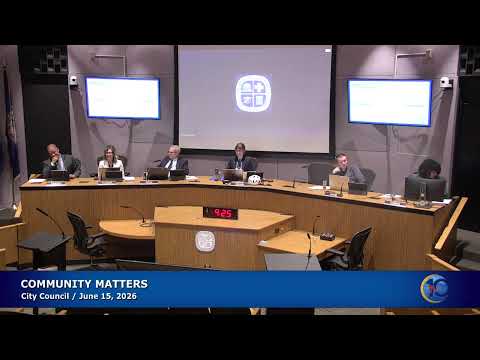
A large group of community members told Charlottesville City Council on Monday they want more study and public vetting before any vote to convert Water Street into a one‑way paired configuration.
Multiple speakers during the community‑matters period — including downtown property owners, business operators and residents — said the proposal risks disrupting traffic flow, concentrating congestion on South Street, and damaging the fragile downtown economy that supports city revenues. Joan Fenton, a longtime downtown property owner, said past conversions had been followed by declines when officials did not do careful pre‑implementation study. “If you’re going to do something like this, you need to know what the impact is going to do before you do it,” she told the council.
Others highlighted safety and access concerns. Michael Kaplan, who described himself as a community member, urged council to postpone any vote until the plan is supported by town‑wide traffic data and analysis of impacts on nearby intersections including West First, West Second and South Street. Contractors and transportation professionals present urged that the design be integrated into a broader master plan and that the city consider staged pilots or temporary demonstrations before committing to a permanent conversion. “This plan was crafted without considering the impact on West First, West Second, South Street, or Second Street East,” Kaplan said, warning the change could simply move problems a few blocks rather than solving them.
Speakers also raised economic stakes. Gre Aenbach and other business representatives argued the downtown mall’s success depends on accessible parking, clear wayfinding and predictable vehicle access, and that altering those conditions could push customers to outlying centers. Susan Cutner, who lives and works on the downtown mall and rides a bicycle frequently, urged the council not to allow a small but passionate biking constituency to determine traffic movement for the larger community of residents, tourists and delivery vehicles.
Supporters of multimodal improvements also spoke but framed the debate as one of timing and study rather than principle. Several people said they supported improved bicycle and pedestrian safety but asked that changes proceed only after engineering analyses and pilot testing. Councilmembers noted that VDOT/SMART SCALE funding and the city’s application process require a defined project scope, and multiple questions from staff and the state transportation office about additional traffic data were raised during the public Q&A.
The council endorsed a Smart Scale application for a West Main/Ridge project later in the meeting and added a council request that city staff scope a city‑sponsored demonstration project to assess impacts in advance of any full implementation. The resolution passed 3–1; council members said any actual construction would be years away and depend on funding. For now, the debate continues as council and staff weigh how best to balance downtown economic vitality with multimodal safety improvements.