Get Full Government Meeting Transcripts, Videos, & Alerts Forever!
Get email alerts on the Bess Policy topic
No spam. Unsubscribe anytime.
Reno County split over ban for large battery storage; proposed ban fails on 2–3 roll call
Summary
Commissioners debated whether to ban large battery energy storage systems (BESS) in Reno County's unincorporated zoned areas and instead consider conditions for Planning & Zoning review. A motion to ban BESS in zoned unincorporated areas recorded two votes for and three against on the roll call presented at the meeting.
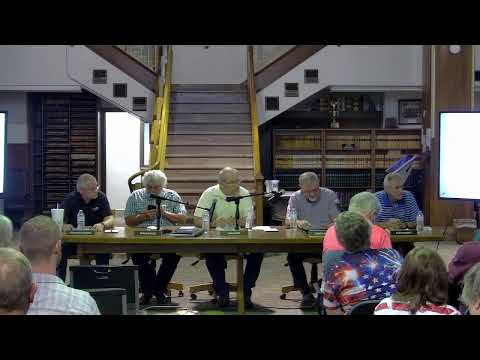
A special meeting of the Reno County Commission focused on whether to recommend a countywide ban or tighter conditions for large battery energy storage systems (BESS) and on how to approach proposed data centers.
Commissioners and members of the public spent much of the meeting weighing environmental and public-safety concerns — particularly water use, cooling systems for battery installations, and potential contamination risks — against economic and infrastructure considerations.
"These companies have no conscience. Their only conscience is what puts the most money in their pockets," said Don, a local resident, arguing for strict enforceable terms and cleanup liability in any development agreements.
Commissioner Hurst described the difficulty of deciding without more information and said he expected to remain opposed to permissive approvals: "I'm going to end up being a no vote," he said.
Procedural context mattered throughout. Staff reminded the board that the county's land-use jurisdiction covers only the unincorporated zoned areas and that any concrete decision would ultimately flow through the Planning & Zoning Commission, which must hold a public hearing before making a recommendation.
After extended discussion, a commissioner restated a motion to ban BESS in the county's zoned unincorporated areas (excluding city jurisdictions). Abigail, the clerk, called the roll: Commissioner Parks voted yes; Commissioner Vincent voted no; Commissioner Winger voted no; Commissioner Bogner voted yes; Commissioner Hurst voted no. The votes recorded on the roll call in the transcript were two in favor and three opposed.
The commission's discussion repeatedly returned to enforceability: speakers urged that any regulatory approach include monitoring, inspection authority, and clear development‑agreement language about cleanup liability and road/public-works impacts. Multiple commenters pointed to past contamination incidents in other jurisdictions to underscore the stakes.
Next steps: commissioners said the material discussed and the questions raised would be provided to the Planning & Zoning Commission for study and public hearings. Staff and counsel summarized that a conditional-use-permit (CUP) approach would handle projects case by case, while a regulation adopted by Planning & Zoning and County Commission would apply more broadly.
The special meeting then moved on to data centers; the BESS agenda item closed with the recorded roll call and no countywide regulation enacted that night.
(For provenance: topic discussed from SEG 050 through SEG 1246; roll-call vote recorded at SEG 1237–1246.)