Get Full Government Meeting Transcripts, Videos, & Alerts Forever!
Get email alerts on the Vacant Property Policy topic
No spam. Unsubscribe anytime.
Green Bay council narrowly votes to ask staff for memo on vacant-property registration and fees
Summary
After several hours of debate, the Common Council voted 6–5 to refer Alder Joy Presley’s petition to staff for a memo exploring a vacant property registration and fee program for long-unused residential and commercial properties, removing language directing staff to draft an ordinance or fee schedule.
The Green Bay Common Council voted 6–5 on June 16 to refer a petition from Alder Joy Presley to staff asking for a memo exploring a vacant property registration and fee program for residential and commercial properties that remain unused for an extended period.
Alder Joy Presley, who submitted the petition, said the city expends staff and emergency resources on vacant properties and a standardized structure would “account for these additional burdens” on the city and neighbors. Presley argued a registry and fee would create a list of vacant properties and provide a way to recover costs for inspections, grass cutting and other interventions.
Opponents, including Alder Grant, said existing nuisance and inspection mechanisms already address dilapidated properties and cautioned that a broad fee program could have unintended consequences for homeowners and small businesses. Grant argued staff time would be better spent diagnosing the specific problems and fixing enforcement gaps rather than establishing a new fee program.
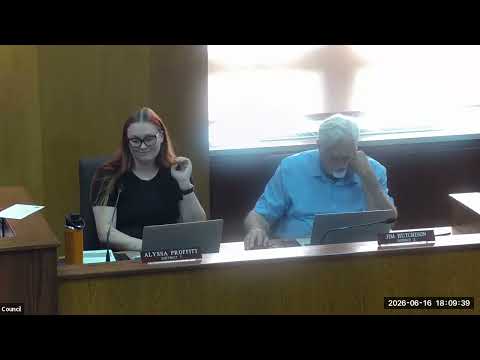
Several council members urged a cautious, fact-finding approach. Alder Hutcherson moved to change the referral language so staff would prepare a memo rather than draft an ordinance and a fee schedule immediately; the amendment removed direction to create a fee structure until after staff reporting. The amended referral was seconded and adopted as the final motion.
The council previously voted on a motion to deny the referral; that motion failed 4–7. After discussion and the amendment to request a memo rather than a draft ordinance, the council approved the referral 6–5.
City staff (through Director Reneer Wig) said complaints about individual properties are currently handled through existing inspection and code-enforcement processes, but Wig confirmed staff would follow up on complaints and issue necessary orders. The referral asks staff to return to council with options that would discourage long-term vacancy and address public costs such as code enforcement, safety, maintenance and neighborhood impacts.
The memo requested by the council is intended to outline options, potential exemptions (for example, estate transfers or active rehabilitation), and considerations for enforcement, rather than to impose an immediate fee. The council did not adopt an ordinance or any fee schedule at the meeting; the action was strictly a referral for staff study.
Next steps: staff will prepare the requested memo for council consideration; no implementation or fee has been approved.