Get Full Government Meeting Transcripts, Videos, & Alerts Forever!
Get email alerts on the Transportation Penny topic
No spam. Unsubscribe anytime.
Council advances 1% transportation sales tax ordinance to referendum after public hearings and committee amendments
Summary
Council approved the transportation penny sales-and-use tax ordinance at second reading (10–2) and endorsed Committee-of-the-Whole changes to allocations among roads, greenbelt/land-trust and transit; supporters at the public hearing urged investment in roads, parks and transit.
Greenville County Council approved an ordinance at second reading to place a 1% transportation sales and use tax before county voters, advancing the measure to the next stage with committee changes to project allocations and with language allowing limited amendments at third reading.
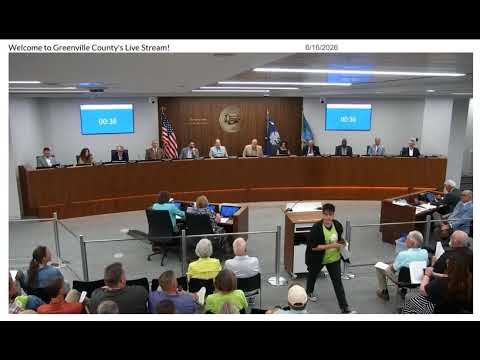
The public hearing drew several supporters who urged investment in roads, conservation and transit. Buster Greggs described preserving family farmland through conservation easements; Leanna Cukainis urged safer roads and more greenway space for children; Melinda Smith framed transit and green space as public-health investments; Casey Schwager, a local infrastructure contractor, cited decades of underfunding for county-maintained roads; and Lucas McDonald and others urged transit expansion and the chance for voters to decide.
Council and staff reported that Committee of the Whole discussions adjusted the baseline estimate used for allocations and revised percentages among county allocations, green-belt/land-trust funding and transit. Council members noted an updated revenue estimate from the South Carolina Department of Revenue and agreed committee adjustments shifted more funding toward greenbelt and transportation than earlier drafts while preserving substantial county allocations.
On roll call the ordinance as amended at committee advanced at second reading by a 10–2 vote. Councilman McGehee presented the ordinance and the motion to adopt the committee-amended version; Councilman Seeman moved to allow amendments at third reading in committee-consistent form and the Council voted to permit that process.
What’s next: With second reading passed, the measure will be placed on the ballot subject to the county’s referendum procedures if required by state law. Staff and council said they will finalize third-reading language and ballot questions consistent with the committee’s recommendations.