Get Full Government Meeting Transcripts, Videos, & Alerts Forever!
Get email alerts on the Infrastructure Emergency topic
No spam. Unsubscribe anytime.
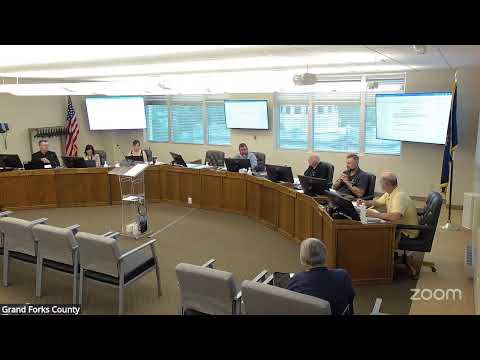
Grand Forks County extends emergency declaration for Emerado after repeated waterline failures
Summary
The commission unanimously extended an emergency declaration for Emerado to 30 days after city and consultant briefings reported repeated breaks on a 1960s cement-asbestos main; county staff will compile costs and pursue grant and loan options before a likely July 7 follow-up.
Grand Forks County commissioners unanimously voted to extend an emergency declaration for the city of Emerado to 30 days after hearing from city officials and a consulting engineer about repeated breaks on an aging water main.
Mayor Lanes told the commission the city detected sharply increased water usage "upwards of what they calculated to be a little over $100,000 a month" and that initial temporary repairs failed. Jim Olson of Bluewater Consulting described the line as "cement asbestos" installed in the 1960s and said crews found multiple new leaks, difficult soil conditions near the railroad and mixed-diameter pipe sections that contribute to failure. "That line is 70 years old... It's at the end of its useful life. It's done," Olson said.
Why it matters: residents in and near Emerado have experienced loss of service and some rural customers remain without water. The county’s extension allows the city and county to continue emergency repairs, track costs, and pursue funding while avoiding an immediate disaster declaration at the state level.
What the county decided and what comes next: the motion to extend the county emergency declaration was moved, seconded and approved by voice vote. Commissioners asked city and county staff to compile invoices and cost estimates and to return with a firmer request at the July 7 commission meeting or call a special meeting if needed. Administrator Ford and State's Attorney Walmstead were directed to work on funding eligibility and paperwork.
Funding and technical options discussed: city presenters proposed abandoning approximately five to six miles of brittle asbestos main and installing short 1-inch service lines to tie an estimated 10–12 rural customers into East Central Rural Water District’s system. Presenters estimated contractor hookup costs in some cases could be around $6,000 per service. Commissioners and staff identified possible funding sources including USDA grant programs (noted as commonly 75/25 cost-share and paperwork-heavy), State Water Commission grants (noted as 60/40 and quicker for under $100,000), State Revolving Fund loans (SRF) and Bank of North Dakota low-interest loans. Several commissioners cautioned about setting a county-funding precedent for city or rural-district infrastructure but supported immediate emergency assistance.
Claims and responses: small-business owner Sean Beauclair had earlier urged the commission to intervene on a separate issue involving Memorial Village and UND, saying there was a "$3 million annual loss to North Dakota and UND" related to that project; commissioners said that issue appears to be a state or city matter, not a county-controlled contract. On Emerado, the city and county agreed to document expenses so funding options can be evaluated.
The meeting record shows staff will gather invoices and estimates and return with recommended next steps; the county did not declare a state-level disaster but extended the local emergency declaration to allow continued response.