Get Full Government Meeting Transcripts, Videos, & Alerts Forever!
Get email alerts on the Environment topic
No spam. Unsubscribe anytime.
Commission grants local approval for Rapid City to pursue permitting for aircraft de‑icing pond; DNR technical review to follow
Summary
The board approved a resolution allowing the City of Rapid City to start state permitting for a proposed de‑icing glycol holding pond at the regional airport; consultants said DORN review will require liners, operations plans and other controls.
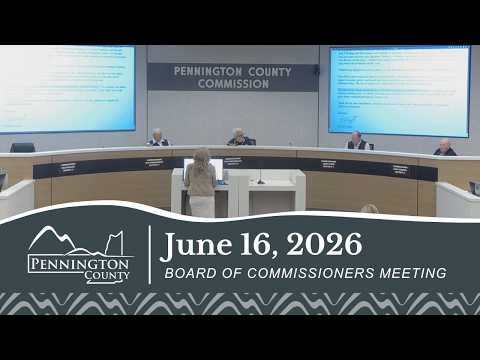
The Pennington County commission voted to provide the local approval required by state law so Rapid City may begin state permitting for a proposed aircraft de‑icing glycol holding pond near the regional airport.
City and airport consultants explained that historically de‑icing fluid (glycol) was collected and hauled to the Rapid City wastewater plant in totes. The proposed plan would repurpose an existing lagoon as a holding pond for collected glycol prior to approved disposal. Jason Hines, an engineering consultant, said that DORN technical review will require a robust containment system (liner), an operations plan addressing incoming volumes and contingency handling, and ongoing monitoring — and that the county’s approval only begins the state permitting process, not technical acceptance.
Several commissioners voiced caution and said the state review must be thorough; the board approved the local‑approval resolution so the city may proceed with DORN’s technical review. DORN will hold engineers to landfill‑style liner and operations standards and may require more detailed plans before granting any permit.
Why it matters: Glycol is a chemical byproduct of aircraft de‑icing that requires careful handling to prevent environmental effects. County approval lets the city seek state technical review; final design and permits, plus required mitigation, will be decided by DORN.