Get Full Government Meeting Transcripts, Videos, & Alerts Forever!
Get email alerts on the Housing Incentives topic
No spam. Unsubscribe anytime.
Siloam Springs staff outline housing-incentive program to spur 55+, missing-middle and conservation projects
Summary
City staff presented a new housing incentives program aimed at diversifying Siloam Springs' housing stock — targeting 55+ housing, conservation subdivisions, cottage courts, assisted living, executive housing, multifamily and missing-middle types — and proposed code waivers, cost-share agreements, and a timeline that includes public outreach and Planning Commission review this summer.
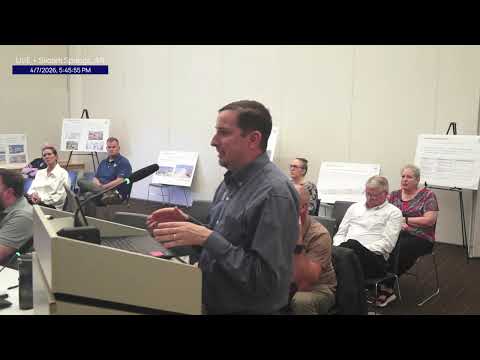
Ben Rhodes, a city planning presenter, told the Siloam Springs Board of Directors on April 7 that the workshop’s purpose was to present a staff-crafted housing-incentive program intended to encourage development types the market is not producing on its own. Rhodes said regional demand has grown significantly and local supply has not kept pace, citing a rise in annual home sales in Northwest Arkansas and steady population growth in Siloam Springs from roughly 10,000 in 2003 to nearly 23,000 today.
Rhodes walked the board through the range of housing types the program targets: age-restricted 55+ communities, conservation developments that preserve at least a portion of natural lands, cottage courts, assisted-living cottage developments (distinct from 24-hour skilled nursing), executive homes, multifamily products and missing-middle infill such as townhomes and fourplexes. He said these types would expand options for seniors, first-time buyers and workers seeking different price points and unit types.
The incentive framework is organized into codes A through H. Examples include Code A (waiver of utility-extension fees), Code B (waiver of street impact fees), Code C (waiver of selected building fees), cost-share agreements for drainage, street and utility infrastructure where work is performed within public easements, reductions in certain zoning restrictions (setbacks) and a cost-share for required flood studies. Rhodes emphasized that cost-share incentives are limited to public assets or to projects where public easements and dedications ensure a public interest at project completion.
Randall Clark, the city building official, detailed eligibility and minimum standards for each housing type. For example, staff’s current draft requires a minimum number of dwelling units (typical thresholds discussed were 10 units for many categories, with earlier draft references to five units noted), ADA-compliant amenities, covenants or contractual commitments restricting units to 55+ for a defined period, and conservation developments to preserve at least 30% of a site in perpetuity through conservation easements. Clark said significant developments using the 55+ incentive would be asked to accept a 20-year contractual restriction as part of the incentive agreement.
Board members pressed staff on several points. Directors asked how the annual caps on awards were selected; Rhodes said the numbers were placeholders set low and remain adjustable by the board and dependent on available funding. Directors also sought assurance that the program would not be gamed by speculative applicants. Staff replied that incomplete or nonviable submissions would not pass the initial submittal verification and that applications must meet specified pre-submittal and concurrent-development requirements.
Several directors expressed concern about the program’s long-term effects. One director said he had observed 55+ developments elsewhere that, after the restriction period elapsed, deteriorated as property-care obligations lapsed; he asked how the city avoids inheriting maintenance problems years later. Rhodes and Clark pointed to the 20-year contract term as a stronger-than-federal minimum (staff cited a typical federal funding minimum of 15 years) and noted the program allows the city to require covenants, reserve maintenance funds and recorded dedications before releasing public funds.
Rhodes closed by presenting the outreach and approval timeline: a stakeholders meeting with local builders around May 7; a public town hall June 11; Planning Commission initial presentation July 14; Board second presentation August 4; post-approval materials live September 14; and an effective date for incentives of January 1 of the following year. Staff said the program would require administrative checks (city administrator funding confirmation and city attorney review), Planning Commission review and final Board approval for each incentive agreement.
Next steps: staff will host the builders’ stakeholder meeting and public town hall and return the draft program for the Planning Commission’s review in July and the Board’s consideration in August. The board did not adopt a final ordinance at the workshop; staff will incorporate board feedback and legal counsel’s comments before formal legislation is brought forward.