Get Full Government Meeting Transcripts, Videos, & Alerts Forever!
Get email alerts on the Expungement Services topic
No spam. Unsubscribe anytime.
Maryland Volunteer Lawyer Service proposes free expungement program for Baltimore County residents
Summary
Maryland Volunteer Lawyer Service asked the commission to fund an expansion of its workforce-development expungement program to Baltimore County, proposing two staff and an expected first-year caseload of about 350 residents with filings typically resolved in 3–6 months.
Maryland Volunteer Lawyer Service presented a proposal to the Baltimore Community Reinvestment and Repair Commission to provide free criminal record expungement services to residents of Baltimore County, MVLS staff said.
Bibios introduced the nonprofit and Chris Sweeney, MVLS’s staff attorney for the workforce development project, explained the model: MVLS works with workforce and re-entry partners, holds legal screening sessions, and provides one-on-one assistance to prepare and file expungement petitions. Sweeney said MVLS’s Baltimore City workforce project has made expungement a primary service and the organization proposed replicating that model in Baltimore County.
Key proposal details: Sweeney said MVLS would hire a staff attorney and a paralegal for the county project and estimated the program could serve about 350 people in a first year if staffed as proposed. MVLS described outreach through shelters, community centers, schools and job-training sites, offering advanced sign-ups and day-of consultations, background checks and filings, and referrals to pro bono volunteers for additional legal needs.
On outcomes and timing, Sweeney said most expungement filings are granted; once paperwork is filed, an order typically issues in about three to six months depending on the county, with Baltimore County tending to be on the faster end. Commissioners pressed MVLS on handling overflow demand and prioritizing people who are homeless or have imminent housing or employment needs; MVLS said it would partner with continuum-of-care organizations to triage urgent cases, accept walk-ins, and add clients to its online intake when capacity is exceeded.
Financials discussed during the meeting were approximate: commissioners and presenters noted MVLS hopes to serve 350 clients in year one, and a back-of-envelope per-client cost figure in the transcript is unclear and therefore not stated here. County staff cautioned that increasing award amounts can change grantees’ audit and tax obligations, and recommended a standardized process for any award adjustments.
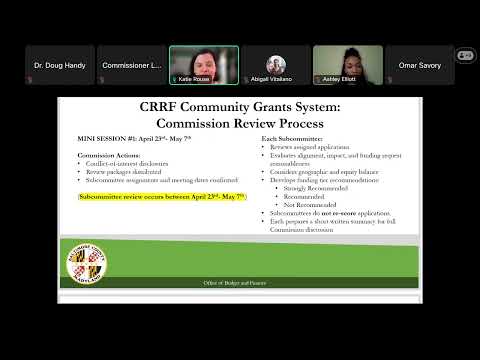
The presentation concluded with commissioners thanking MVLS; no funding decisions were made at the session. Commissioners were reminded to schedule subcommittee meetings and the full commission will consider recommendations at the May 7 meeting.