Get Full Government Meeting Transcripts, Videos, & Alerts Forever!
Get email alerts on the Refuse Ordinance topic
No spam. Unsubscribe anytime.
Long Beach debates food-service refuse rules as businesses and sanitation staff weigh logistics
Summary
The council held a public hearing June 16 on a proposed ordinance requiring food-service businesses to use hard refuse containers and daily collection; sanitation staff said twice-daily pickup already reduces rodent risks, while West End business owners warned of storage and operational constraints.
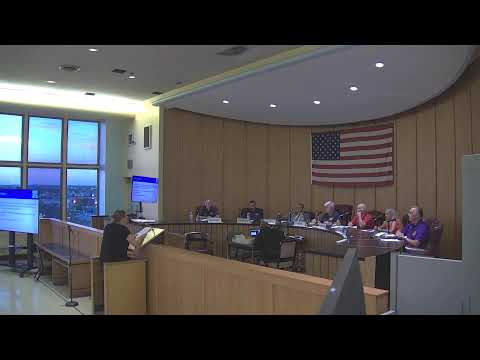
At a June 16 public hearing the Long Beach City Council considered a proposed ordinance that would require commercial food-service establishments to place refuse in hard containers (not bags) and to arrange for collection every day the business operates. City staff framed the proposal as a public-health and quality-of-life measure intended to reduce rodent activity, spilled food liquids and torn bags on sidewalks.
During the hearing several council members and residents raised practical concerns about implementation in dense commercial strips such as the West End. One council member asked where businesses would store the number of cans needed for busy nights; commenters described seeing groups of bags on curbs in the morning and questioned how many containers a single storefront could realistically store.
Sanitation Superintendent Deon Parker told the council no business in town would need 30 cans and estimated a realistic maximum of about eight to ten receptacles for the busiest establishments. Parker said the department currently picks up refuse morning and night in many areas and that moving toward required hard containers and daily collection would reduce rodent problems and street litter.
Business owners and residents urged caution. Some suggested pilot options such as stackable containers, rental or sale of standardized large receptacles, or flexible pickup times (night vs. morning) to avoid forcing businesses to store multiple cans in limited kitchens. Residents also asked whether pavement power-washing or a requirement that proprietors maintain sidewalks could be folded into enforcement.
The council did not finalize the ordinance at the meeting. Instead it kept the public hearing open and directed sanitation and other staff to return with operational plans addressing storage, pickup frequency, private-carrier arrangements and enforcement mechanisms. The next steps include a logistics report and a subsequent public hearing when staff can present options to minimize burdens on small businesses while achieving sanitation goals.
Quotes in this article are taken from recorded public testimony and staff remarks at the meeting and are attributed to speakers on the public record.