Get Full Government Meeting Transcripts, Videos, & Alerts Forever!
Get email alerts on the Scoping Document topic
No spam. Unsubscribe anytime.
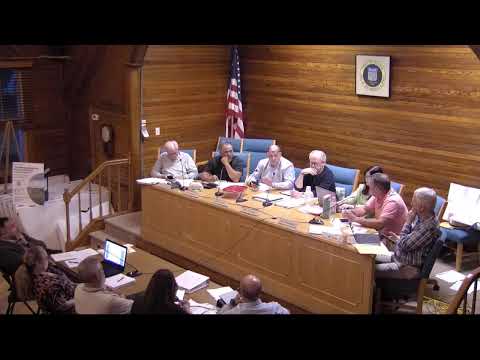
Clinton planning board reviews draft scoping document for Hudson Valley conference center, sets public comment deadline
Summary
The Town of Clinton Planning Board reviewed a consultant-marked draft scoping document for the Hudson Valley site plan and amended special-use permit for a conference center, requested clarified project descriptions and studies, and reminded the public that comments are due by 5 p.m. June 26.
The Town of Clinton Planning Board continued its review on the draft scoping document for the Hudson Valley site plan and amended special-use permit, a step toward preparing a draft environmental impact statement (DEIS) for the proposed conference center. The board and its consultant walked through the scoping document structure and identified areas that need more detail before the DEIS is finalized.
The consultant said the board’s draft is a marked-up version of the applicant’s submission and emphasized that the scoping document should remain objective, with opinions labeled as such and technical material presented by tables and figures. Board members asked the applicant to expand the project description to include clear site boundaries and acreage, a table listing guest units by building and bedroom count, building dimensions and massing, and a figure showing proposed demolitions and new structures.
The board asked for more operational detail in the DEIS, including hours of operation, anticipated peak occupancy and staffing levels, how overnight attendance will be verified to meet the town’s special-use permit requirement that overnight guests attend events, and a management plan that explains long-term operations and contingency measures if management changes. The consultant said the DEIS should also identify utilities (sewer, water, stormwater), ownership and maintenance responsibilities, and whether on-site wastewater treatment will be expandable.
The scoping document will require studies commonly found in DEIS filings: noise, lighting, traffic, wetlands and biological inventories, groundwater and water-quality testing for discharges to the receiving Class A stream, and construction-period environmental protections such as a stormwater pollution prevention plan. The consultant asked the applicant to provide upstream and downstream water-quality sampling and to describe treatment plant capacity, treatment processes, and backup systems.
Board members discussed alternatives the applicant must evaluate. In addition to the no-build scenario the consultant said the DEIS should, where feasible, present an order-of-magnitude comparison to other plausible uses (for example, a residential subdivision) so the board can compare traffic, infrastructure impacts and site disturbance across options.
The board was reminded that the public comment period for the scoping document remains open; staff noted comments must be submitted by 5:00 p.m. on Friday, June 26 to be considered in the scoping record. The Planning Board scheduled a primary follow-up meeting for July 7 at 6:30 p.m. and a tentative backup meeting for July 16 at 6:30 p.m. to review public comments and consider adoption of the scoping document.