Get Full Government Meeting Transcripts, Videos, & Alerts Forever!
Get email alerts on the Education Lcap Budget topic
No spam. Unsubscribe anytime.
Palmdale Aerospace Academy board approves 2026–27 LCAP and budget overview
Summary
After a presentation on student performance, interventions and planned spending, the Palmdale Aerospace Academy District Board approved the 2026–27 Local Control and Accountability Plan, the Budget Overview for Parents and the Local Indicator Self‑Reflection by voice vote.
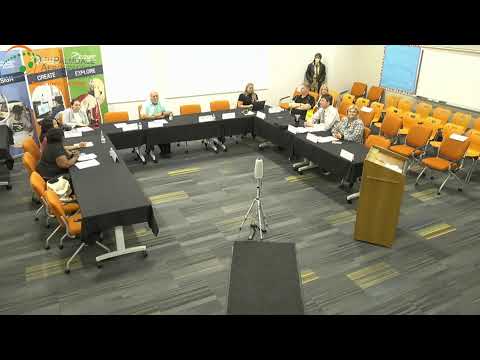
The Palmdale Aerospace Academy District Board of Directors approved the proposed 2026–27 Local Control and Accountability Plan (LCAP), the Budget Overview for Parents (BOP) and the 2026–27 Local Indicator Self‑Reflection after a presentation and brief discussion.
The presentation, led by a district staff member identified in the meeting as Gary, reviewed two‑year baseline comparisons and recent assessment results. Gary said STAR reading scores dropped nine points from the baseline and elementary STAR math was down six points, while early literacy increased by 10 points. The district reported no two‑year baseline for NWEA because that assessment was administered for the first time this school year. He said the percentage of fully credentialed teachers rose to about 80% (up 23 percentage points from two years ago) and that the APG completion rate was about 68% (up 7 points). Gary reported a reduction in suspension rates and said chronic absenteeism was at 11.7%, a decline he described as about 26% from the baseline, with daily attendance up about 7%.
Why it mattered: the presenter tied those metrics to the LCAP’s actions, describing coaching and professional development as primary strategies to raise rigor and improve student outcomes. He said the district had hired coaches at elementary and middle levels and more recently at the high school, and planned three of next year’s four professional development days to focus on English language development, academic vocabulary and modeling strategies. The LCAP also includes targeted K–8 interventions and a new credit‑recovery program for high school students.
The presenter described subgroup performance and the state/local dashboard ‘red’ designation: long‑term English learners (LTELs), English learners with disabilities and socioeconomically disadvantaged students were among groups identified for focused supports. The district acknowledged hiring challenges that prevented it from filling an intervention teacher position at the high school this year and noted it did not hire an additional nurse as initially planned, instead providing health services with one nurse and two LPNs.
On funding, the presenter discussed the Learning Recovery Emergency Block Grant (LREBG), describing it as one‑time funds the district must include in the LCAP and saying the funds extend through 2027–28 and “we have until June 30th to spend it.” Planned uses for LREBG and other one‑time funds included teacher summits and professional development, continued NWEA and Solution Tree supports, credit recovery, a summer robotics camp for middle and elementary students, and after‑school academic support.
Budget figures presented: the district anticipates approximately $48.9 million in total revenue for 2026–27 and plans to spend about $47.5 million, with more than $45.3 million of expenditures directly aligned to LCAP goals, actions and services. The presenter said roughly $7.4 million is expected in supplemental and concentration funding targeted to high‑need students; a smaller share of expenditures not listed in the LCAP will cover curriculum adoption, classroom remodels and parking‑lot improvements.
Board action: A board member moved to approve the 2026–27 LCAP, the Budget Overview for Parents and the Local Indicator Self‑Reflection; another member seconded. The board voted by voice and the chair announced the motion approved.
What’s next: The presenter and board members did not identify additional required approvals beyond the board vote at the meeting. The public hearing periods for both the LCAP and the BOP were opened and closed with no public comment recorded.
Representative quote: Gary, presenting data and next steps, said: “This is the third year of our LCAP that we’ve been working on,” and described coaching supports and targeted interventions as central to the plan’s effectiveness.
Ending: The board approved the package of documents and then adjourned the meeting at 5:57 p.m.