Get Full Government Meeting Transcripts, Videos, & Alerts Forever!
Get email alerts on the Education Policy topic
No spam. Unsubscribe anytime.
Racine governance committee weighs board‑level ban versus superintendent‑led approach to student cell phones
Summary
At a June 15 Governance Committee meeting, Racine board members and consultant Dr. Steech debated whether to tighten the district's OE10 monitoring language and require superintendent Soren Gayeski to report evidence on classroom disruption, or to issue an explicit, board‑directed cell‑phone prohibition. No formal vote was taken.
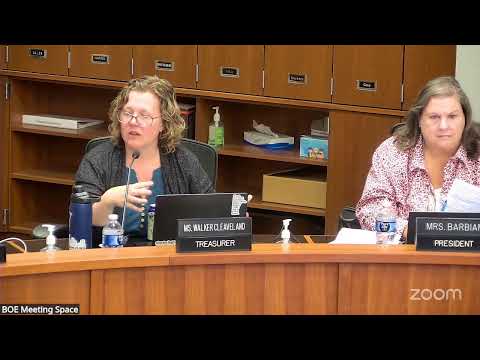
The Racine Board of Education Governance Committee met June 15 to consider how the district should address classroom disruptions caused by student cell phones, debating whether to direct the superintendent to implement a strict, board‑level rule or to require the superintendent to interpret and monitor the issue within the district's coherent governance framework.
Consultant Dr. Steech told the committee that the board faces two clear paths: craft a detailed, prescriptive policy that assigns the board responsibility for implementation, or strengthen existing policy language (OE10) and require the superintendent to return an interpretation and monitoring evidence that demonstrates whether cell phones are interrupting instructional time. "You make the board set the destination and the superintendent chooses the route," Dr. Steech said, urging the board to clarify what disruption they want to prevent and where it should apply.
The distinction matters because a prescriptive board policy would make the board accountable for downstream consequences, including potential increases in suspensions and shifts in administrative workload, several members said. "If that cell phone policy has ramifications on other things that you aren't aware of, who is accountable for those impacts?" Dr. Steech asked. He identified OE10 item 8 (protecting instructional time from unnecessary intrusions) and OE10 item 12 (monitor and control electronic access) as the most relevant policy language the board could tighten or reinterpret.
Several teacher‑members pressed for firmer action. "We implement the rule and we stick with it," said Mr. Blagio, arguing for a decisive rollout that would let staff enforce consistent expectations. Mr. Cody, another board member who described classroom experience with phones, said building‑level responses "haven't gotten any better" and called for a stricter policy. By contrast, other members cautioned that a board‑mandated approach could appear adversarial to the superintendent and could be difficult to implement consistently across elementary, middle and high schools.
Members also flagged community and staffing impacts: some worried parents would withdraw children if enforcement was strict; others warned that principals and assistant principals could be diverted from instructional leadership to discipline tasks. Dr. Steech recommended a practical middle path under coherent governance: require the superintendent to develop a clear interpretation of OE10 that includes a new monitoring indicator describing how the district will measure and report the impact of cell phones on instructional time. That interpretation would come back to the board for review and revision.
The committee did not take a vote. Members agreed to continue the discussion at the full board business meeting, where they will decide whether to pursue an explicit directive or to proceed through the coherent‑governance monitoring route. The committee then moved to an executive session scheduled to follow the meeting.