Get Full Government Meeting Transcripts, Videos, & Alerts Forever!
Get email alerts on the Police Headquarters Financing topic
No spam. Unsubscribe anytime.
Lebanon officials present referendum plan and worst‑case financing figures for new police headquarters
Summary
At a June 17 special meeting, Lebanon City leaders outlined a preliminary plan to place a referendum on the 2026 ballot to finance a new police headquarters, citing statutory deadlines. Presenters gave worst‑case financing figures (maximum $52.165M par; $4.689M max annual lease) and estimated median homeowner impact of $216 per year under the maximum scenario.
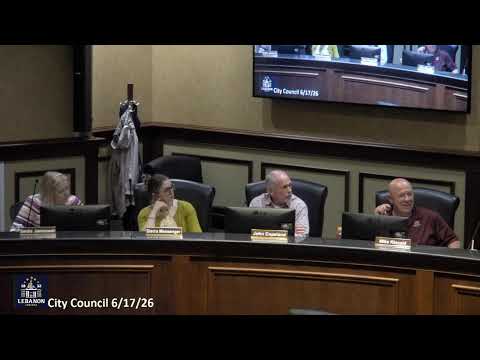
Lebanon City officials held a special public hearing on June 17 to present legal and financial details of a proposed lease‑financed police headquarters and to begin the statutory referendum process that could place the question before voters in November 2026. City attorneys and finance advisors emphasized that the figures presented to the public are the required worst‑case estimates, not guaranteed final costs.
Catherine Fella of the law firm Dinsmore told the council the proposed project meets Indiana’s controlled‑project thresholds, which triggers referendum procedures under state law. She said the council can elect to apply referendum procedures even if no valid petition (the statute contemplates petitions requiring 500 or more signatures) is filed, and that administrative reviews by the Boone County Election Board and the Department of Local Government Finance (DLGF) must be complete for the question to be certified by the statutory deadline. “That first resolution tomorrow would be the council making that determination to take all the steps necessary to proceed with the financing and moving through that process,” Fella said.
Finance consultant Emma Adland of Baker Tilly outlined two scenarios used for the referendum materials: an estimated scenario and a statutory maximum. Both scenarios assume $45 million in net project proceeds; the estimated par amount shown was $50,515,000 and the maximum par amount is $52,165,000. The presentations reflect two years of capitalized interest and include underwriting and issuance costs. Adland said, “These numbers are the maximums you would commit to in the ballot language — they are worst‑case assumptions built into the statutory process.”
Adland described how referendum debt is calculated from a separate referendum tax base. Using the city’s 2026 certified assessed value, she said the estimated annual lease rental would be about $4.156 million and the maximum annual lease rental is capped at $4.689 million. Under the maximum scenario, the illustrative impact on a median homestead (rounded to a $250,000 value) was $216 per year; the estimated scenario showed $192 per year. She illustrated that as new assessed value from planned development is added to the referendum tax base — including incremental value from IDD and TIF areas and large investments such as Meta and Lilly — the per‑homeowner impact would decline substantially.
Council members pressed presenters on the distinction between the statutory worst‑case figures that must appear in the referendum question and the actual amount the city expects to borrow and spend. Council member Mike Kincaid asked whether the referendum is mandatory because of project size; Fella and staff clarified the statute makes the project subject to referendum procedures but the council is electing to place the question before voters. John Copeland, a member of the selection committee, said the committee narrowed respondents to a preferred firm but has not finalized any contract; staff explained the city can scope work with a preferred team but cannot enter into construction contracts before financing is in place and the referendum is approved.
Officials discussed offset strategies for homeowner tax impacts, including IDD/TIF revenues and a planned program of property tax rebates for homestead taxpayers funded by community‑impact and IDD receipts. The mayor noted these mechanisms could significantly reduce what residents ultimately pay and urged public outreach: “We have to be able to communicate this to the community,” he said, noting open houses and opportunities for the public to see the existing facility and better understand the need.
The council read Resolution 2026‑22 into the record, which makes a preliminary determination that a need exists to construct the project and describes required financial disclosures (the resolution sets a project cap of $54,215,000 and the same $4,689,000 maximum annual lease rental). The council opened the public hearing for comments, but no members of the public spoke; the hearing was closed. No vote on the resolution occurred that evening — a second required hearing and further action are scheduled for the council’s next meeting.
The council concluded with a procedural motion to adjourn. The scheduled next step is the second preliminary hearing and possible adoption of the resolutions that would start the official petition/review timeline and the ballot‑question certification process.