Get Full Government Meeting Transcripts, Videos, & Alerts Forever!
Get email alerts on the Property Tax Relief topic
No spam. Unsubscribe anytime.
Clark Township tax office holds session to explain state property tax relief and how to apply
Summary
Clark Township's mayor and tax collector held an information session outlining New Jersey's property tax relief programs (Senior Freeze/PTR, ANCHOR, Stay New Jersey), deadlines (Nov. 2), filing options (paper or online via ID.me), mailing schedule for checks, and where residents can get application help.
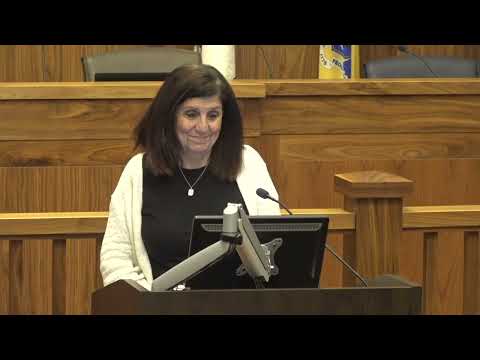
Clark Township Mayor Angel Albanese and Tax Collector Laura Calleguire opened a public information session to walk residents through New Jersey's property tax relief application, the single blue booklet that covers three programs: the property tax reimbursement (senior freeze/PTR), ANCHOR, and the Stay New Jersey benefit.
Calleguire said the session's purpose was "to explain the whole program to you for anyone that hasn't done it," and urged residents to check line 14 of the booklet for their pre-printed base amount if they have applied in prior years. She explained the senior freeze reimburses eligible homeowners for increases above a base year amount but that "you have to pay your taxes as you normally do and the state will send you that $500 back" in examples given during the meeting.
Why it matters: The programs can reduce or reimburse property tax payments for older adults and some people with disabilities, but benefits, particularly under the Stay New Jersey program, are partly contingent on the state budget. Calleguire warned that some payments are only paid if the Legislature and governor approve funding later in the year.
Who qualifies and how to apply: Calleguire described eligibility as follows: applicants must be 65 or older by Dec. 31, 2025, or receiving Social Security disability or railroad retirement disability benefits; they must be homeowners or mobile-home owners for some programs (renters may qualify only for ANCHOR). Applicants filing jointly should use combined New Jersey taxable income reported on the NJ-1040; the collector emphasized that New Jersey taxable income—not federal taxable income—is used for eligibility calculations.
Deadlines and methods: The tax collector said the single application is due Nov. 2 (the transcript references this due date for filing all covered programs). Residents may file by mail (paper checks will be issued) or online. Online filers must verify identity through ID.me; Calleguire said the tax office has a public computer and staff can help residents use ID.me, but urged residents to use the paper form if they cannot complete ID.me verification.
Benefits and caps: The collector gave examples of benefit amounts residents should expect under ANCHOR and related programs: homeowners 65+ with household New Jersey income up to $150,000 were told the ANCHOR rebate would be $1,750, with lower amounts for other income tiers and disability recipients; the programs together cannot exceed $6,500 in total property tax relief, as explained at the meeting. The collector repeatedly advised residents to review the booklet's worksheets (pages 10'11 and 14) to determine what counts as income for eligibility.
Timing and partial payments: Calleguire described a mailing schedule: senior freeze payments will begin to be mailed July 15 for applications already received; ANCHOR payments will begin Sept. 15; additional Stay New Jersey payments are contingent on the state budget vote in June and, if funded, would be mailed in February and May 2027. She cautioned that only partial payments may be available immediately and that remaining amounts depend on legislative budget action.
Help and resources: Calleguire offered in-person assistance at the Clark tax office to review booklets and help residents confirm their base year amount (line 14) and paperwork. She also distributed a purple summary handout and said the state operates a walk-in help desk in Cranford where residents can get assistance without an appointment. The session was recorded and will air on Clark's Channel 36 and the township's YouTube channel.
Resident questions and common issues: Attendees asked whether IRA rollovers and certain retirement items count as taxable income; the collector pointed them to the worksheet pages, saying the worksheets are for residents to calculate income and are not submitted to the state. Residents also asked about moving between homes and how a base year carries forward; Calleguire said the rules were changed to allow carrying a base when a qualifying homeowner moves within New Jersey but acknowledged operational details may be unclear on this first year of implementation.
What happens next: Residents were urged to file by Nov. 2 and to submit prior-year applications when needed to protect their base year. Calleguire recommended filing sooner for those who want earlier checks and said the tax office can print prior forms and help residents who believe their mailed application was lost. Because some payments depend on the state budget, residents should monitor legislative funding decisions and contact legislators or the governor's office if they are concerned.
For help: Clark residents can bring questions or their booklets to the Clark tax office for assistance, use the state walk-in desk in Cranford for direct help, file online with an ID.me account, or mail the paper application by the Nov. 2 deadline. The tax office advised that paper filers will receive paper checks and direct deposit is available only for online filers.