Get Full Government Meeting Transcripts, Videos, & Alerts Forever!
Get email alerts on the Community Center topic
No spam. Unsubscribe anytime.
Community center denied National Register eligibility; board weighs rental, alcohol and safety rules
Summary
Mount Vernon community center staff told the select board the building was found ineligible for the National Register and asked that the denial be entered into the record; the board then discussed storage, AV safety, pest control and whether to allow private rentals that serve beer and wine under insurance and staffing rules.
Sheree Wenszel told the Mount Vernon Select Board that the community center’s application for the National Register of Historic Places was recently denied because several modern alterations—vinyl siding, a roofed ramp, and interior updates to the kitchen and bathroom—removed key features that would support eligibility. Wenszel asked that the denial letter be entered into the public record so future inquiries will reflect the town pursued the process.
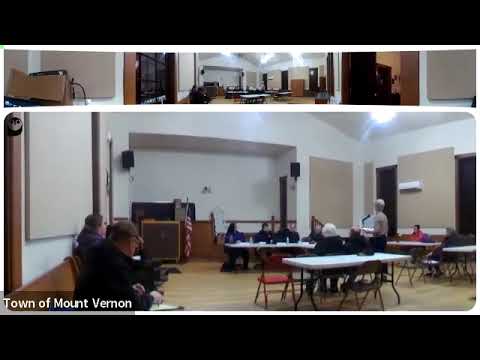
Wenszel, who runs the community center board, then outlined several operational issues the board wants the select board to consider. She said a recent benefit concert and other rentals have exposed conflicts between storage/fixtures onstage (a file cabinet, a large screen and stacked chairs) and the center’s use as a performance and vendor venue. Wenszel emphasized safety concerns around temporary AV equipment and loose cords when children and older residents use the building.
The board discussed whether to permit private events that serve limited alcohol. Wenszel reported conversations with MMA’s risk-management underwriter (Crystal Gilks) and presented two approaches: maintain the current ban on alcohol in town-owned facilities, or allow beer and wine for private rentals under a written facilities-use agreement that requires indemnification and commercial-liability insurance. If alcohol is allowed, the group recommended either a caterer or a TIPS-trained server be required and that renters pay for that person’s service.
Members cited Belgrade Center for All Seasons as a local model that uses a rental agreement, requires proof of insurance and a trained server. Wenszel said the town could require renters to buy a commercial general-liability policy and sign an indemnification clause; she gave a personal example of purchasing a $2 million event policy for $108. Several board members said they were open to allowing beer and wine if the rental agreement shifted liability to renters and required proof of appropriate insurance and staffing.
Other facility topics included the need for a separate community-center calendar (so private event schedules are managed separately from town calendars), an AV equipment timeline and responsibility for ongoing pest control. Wenszel said a volunteer had been baiting mice in the basement but that board members would like the town to consider budgeting or contracting for pest control in the future to avoid relying indefinitely on volunteer labor.
The board agreed to follow up by entering the historic-register denial into the record, checking how nearby venues handle private events, and clarifying which town staff will help migrate the community-center email and calendar accounts.
The select board did not record a formal vote on changing the town’s alcohol policy during the portion of the transcript provided; members directed staff to gather more information and return with recommended language and cost implications.